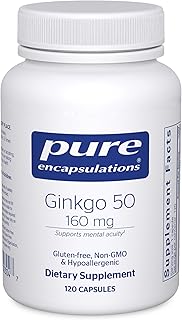
Ginkgo biloba is commonly used by women for circulation support, cognitive clarity during hormonally turbulent life stages, and general wellness routines. There are a few considerations specific to women’s health worth knowing before starting.
This post contains affiliate links. If you buy through them, we may earn a small commission at no extra cost to you. This does not influence what we recommend.
Hormonal Contraceptives and Blood-Thinning Considerations
Combined hormonal contraceptives (the ones containing estrogen) carry a small increase in clotting risk of their own. On clotting, a meta-analysis of 18 randomised trials, mostly in patients with dementia, artery disease or diabetes, found no significant effect of standardized ginkgo extract on platelet aggregation, aPTT or prothrombin time[1]. Whether ginkgo changes how hormonal contraception itself works has not been measured in any study we found. A 2014 review of supplement interactions with female sex hormones lists ginkgo among compounds that may distort the effect of estrogen, and its abstract gives no mechanism or size[2]. The only clinical report we found of ginkgo given alongside hormonal contraception is a 1972 French paper with no published abstract[3]. If you have other clotting risk factors alongside hormonal contraception, mention ginkgo to your doctor as part of the full picture.
Pregnancy and Breastfeeding
There is not enough safety research on ginkgo in pregnancy or breastfeeding to call it safe in either. A systematic review of the evidence for pregnancy and lactation found only very weak animal and laboratory evidence that ginkgo leaf affects platelets, but judged it enough to advise caution around labour, where a longer bleeding time would matter. The same review found the safety of ginkgo during breastfeeding to be unknown and advised avoiding it until good human studies exist[4]. The conservative course is to avoid ginkgo in both situations unless a doctor specifically advises otherwise.
Menstrual Cycle Considerations
You may read that ginkgo makes periods heavier or longer. We could not find a study that measured this. The pregnancy and lactation review above classes the idea that ginkgo leaf may act as an emmenagogue (something that stimulates menstrual flow) as low-level evidence based on expert opinion[4], and the clotting meta-analysis above found no significant effect on clotting measures[1]. Neither answers the question for a menstruating woman, so if you already have heavy periods or a history of low iron, your cycle is worth tracking for the first few months.
Perimenopause and Midlife Use
A large share of the interest in ginkgo among women comes from the perimenopausal years, where changes in memory, focus, mood and circulation often arrive together and are frequently attributed to hormonal shifts. That clustering is real, and it is also what makes evaluating any single supplement difficult.
Sleep disruption is a common feature of this period and independently affects memory, concentration and mood. Something that improves after starting a supplement may be responding to a better run of sleep rather than to the supplement, and there is no way to separate the two without having recorded both.
This is a reason to be more structured, not less. Noting a baseline before starting, and tracking sleep alongside your primary marker, makes a 12 to 24 week assessment meaningfully more informative. Our pages on ginkgo for memory during perimenopause and ginkgo and perimenopausal brain fog cover what the trial evidence supports for those specific uses.
Iron Status and Heavier Periods
The menstrual flow question is worth connecting to something it is easy to leave separate. Women with heavy periods are already at elevated risk of low iron stores, so if ginkgo did increase flow for a particular woman, that change would sit on top of an existing baseline rather than starting from neutral.
The symptoms of low iron overlap uncomfortably with the reasons people take ginkgo in the first place. Fatigue, poor concentration and a general mental dullness are common to both, which means a worsening iron picture can be mistaken for the supplement failing to work, and a supplement can be continued while the real cause goes unaddressed.
If you have a history of low iron or heavy periods, it is worth knowing your current status before starting rather than after, so that any later change has something to be compared against. That is a straightforward blood test and a more useful piece of information than most self-tracking can produce.
Dosing and Product Choice
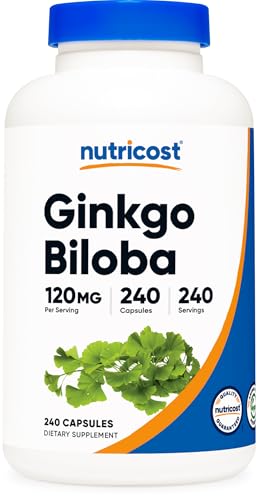
There is no separate dosing range established for women. The studied range is the same, and the standardization specification matters for the same reasons, so the general guidance applies without modification.
What does differ is that the considerations above give more reason to start at the lower end and hold there for a few weeks before deciding whether to move up, particularly if menstrual flow is something you intend to track. Our page on ginkgo dosage for women covers the clinical doses and starting guidelines in more detail.

Frequently Asked Questions
Is ginkgo safe to take with birth control?
No study we found has measured an interaction between ginkgo and hormonal contraception, though one review lists ginkgo among supplements that may alter the effect of estrogen. If you have other clotting risk factors alongside hormonal contraceptive use, mention ginkgo to your doctor as part of a full risk picture.
Can I take ginkgo while pregnant or breastfeeding?
The conservative guidance is to avoid it. Safety in pregnancy has not been established, a systematic review advised caution around labour because ginkgo could prolong bleeding time, and its safety during breastfeeding is unknown.
Does ginkgo affect menstrual flow?
We could not find a study that measured it. The idea rests on expert opinion rather than trials, and controlled trials found no significant effect of ginkgo on clotting measures. If you have heavy periods or low iron, track your cycle for the first few months.
A Note on Bleeding Risk
Important safety note: Ginkgo biloba is often described as a blood thinner. Standardised extract does inhibit platelet aggregation and prolong bleeding time as a pharmacological property[5], but that is a proposed mechanism rather than a confirmed clinical effect: a meta-analysis of 18 randomised trials in 1,985 adults found no significant effect on platelet aggregation, fibrinogen concentration, aPTT or prothrombin time, and did not indicate a higher bleeding risk[1].
A review of controlled studies likewise found that ginkgo did not impair haemostasis or compromise the safety of coadministered aspirin or warfarin, while noting that an idiosyncratic bleeding event cannot be excluded and that isolated case reports do exist[6], including chronic ginkgo use preceding spontaneous subdural haematoma[7].
Those trials were not designed to establish safety in people who are already anticoagulated, so that specific question is open rather than answered. If you take warfarin, aspirin, clopidogrel, or any other blood thinner, or if you have a bleeding disorder or an upcoming surgery, talk to your doctor before starting ginkgo. This applies even to otherwise low-risk uses like memory support.
These statements have not been evaluated by the FDA. This product is not intended to diagnose, treat, cure, or prevent any disease.
References
- Is there a risk of bleeding associated with standardized Ginkgo biloba extract therapy? A systematic review and meta-analysis. Pharmacotherapy, 2011
- Interactions between preparations containing female sex hormones and dietary supplements. Advances in Clinical and Experimental Medicine, 2014
- Prevention of vascular disorders during administration of estroprogestative contraceptives with a medication containing extracts of Ginkgo biloba (in French). Phlebologie, 1972
- Safety and efficacy of ginkgo (Ginkgo biloba) during pregnancy and lactation. The Canadian Journal of Clinical Pharmacology, 2006
- EGb 761: ginkgo biloba extract, Ginkor. Drugs in R&D, 2003
- Potential interaction of Ginkgo biloba leaf with antiplatelet or anticoagulant drugs: what is the evidence? Molecular Nutrition & Food Research, 2008
- Spontaneous bilateral subdural hematomas associated with chronic Ginkgo biloba ingestion. Neurology, 1996
These statements have not been evaluated by the Food and Drug Administration. This information is not intended to diagnose, treat, cure, or prevent any disease. Content is for informational purposes only and is not medical advice; consult a qualified healthcare provider before starting any supplement. As an Amazon Associate we earn from qualifying purchases.