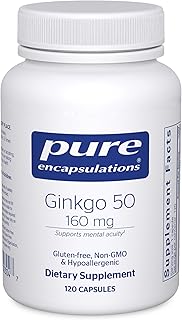
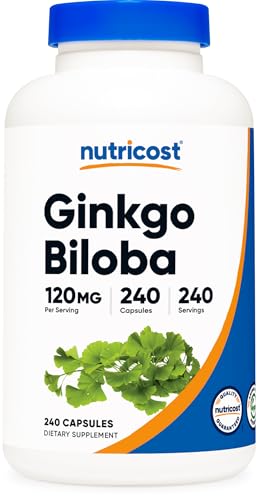
For women over 40 navigating perimenopause and the years beyond, ginkgo biloba is often considered for two overlapping concerns: the ‘brain fog’ commonly reported during hormonal transition, and general circulation support. Here’s an honest look at what the evidence supports for this specific life stage.
This post contains affiliate links. If you buy through them, we may earn a small commission at no extra cost to you. This does not influence what we recommend.
Cognitive Symptoms During Perimenopause
Perimenopausal brain fog, difficulty concentrating, word-finding trouble, and short-term memory lapses, is a well-documented, hormonally-driven phenomenon distinct from age-related cognitive decline more broadly. Ginkgo’s cognitive trial evidence, however, was not specifically designed around perimenopausal populations; most cognitive trials focused on older adults with or without diagnosed cognitive impairment, not hormonally-driven midlife brain fog specifically. This means the applicability of ginkgo’s cognitive research to this particular symptom is more of an extrapolation than a directly studied use case.
Circulation Changes at This Life Stage
Estrogen has a protective effect on blood vessel function, and its decline during perimenopause and menopause is associated with changes in circulation, including more frequently reported cold hands and feet. This is the use case where ginkgo’s actual trial evidence, focused on peripheral circulation, most directly applies, even though the trials weren’t perimenopause-specific.
Medication Overlap at This Age
Women over 40 are more likely to be on blood pressure medications, low-dose aspirin for cardiovascular prevention, or approaching an age where anticoagulants become more common for other conditions. This makes the blood-thinning interaction check especially relevant at this life stage, not an afterthought.

Frequently Asked Questions
Does ginkgo specifically treat perimenopausal brain fog?
It hasn’t been specifically studied for that exact symptom cluster; the broader cognitive trial evidence is mixed and wasn’t designed around perimenopausal populations, so treat any benefit here as an extrapolation, not a proven, targeted effect.
Is ginkgo a substitute for hormone therapy or other menopause treatments?
No. It works through an entirely different, non-hormonal mechanism and shouldn’t be considered a replacement for treatments discussed with your doctor for menopause symptom management.
What should I check before starting ginkgo in my 40s or 50s?
Review your full medication list, including low-dose aspirin or blood pressure medications, with your doctor first, given the higher likelihood of relevant interactions at this age.
Important safety note: Ginkgo biloba is often described as a blood thinner. Standardised extract does inhibit platelet aggregation and prolong bleeding time as a pharmacological property[1], but that is a proposed mechanism rather than a confirmed clinical effect: a meta-analysis of 18 randomised trials in 1,985 adults found no significant effect on platelet aggregation, fibrinogen concentration, aPTT or prothrombin time, and did not indicate a higher bleeding risk[2].
A review of controlled studies likewise found that ginkgo did not impair haemostasis or compromise the safety of coadministered aspirin or warfarin, while noting that an idiosyncratic bleeding event cannot be excluded and that isolated case reports do exist[3], including chronic ginkgo use preceding spontaneous subdural haematoma[4].
Those trials were not designed to establish safety in people who are already anticoagulated, so that specific question is open rather than answered. If you take warfarin, aspirin, clopidogrel, or any other blood thinner, or if you have a bleeding disorder or an upcoming surgery, talk to your doctor before starting ginkgo. This applies even to otherwise low-risk uses like memory support.
These statements have not been evaluated by the FDA. This product is not intended to diagnose, treat, cure, or prevent any disease.
References
- EGb 761: ginkgo biloba extract, Ginkor. Drugs in R&D, 2003
- Is there a risk of bleeding associated with standardized Ginkgo biloba extract therapy? A systematic review and meta-analysis. Pharmacotherapy, 2011
- Potential interaction of Ginkgo biloba leaf with antiplatelet or anticoagulant drugs: what is the evidence? Molecular Nutrition & Food Research, 2008
- Spontaneous bilateral subdural hematomas associated with chronic Ginkgo biloba ingestion. Neurology, 1996
These statements have not been evaluated by the Food and Drug Administration. This information is not intended to diagnose, treat, cure, or prevent any disease. Content is for informational purposes only and is not medical advice; consult a qualified healthcare provider before starting any supplement. As an Amazon Associate we earn from qualifying purchases.