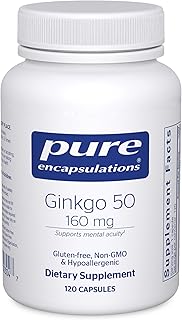
Bioavailability, how much of an ingested compound actually reaches active circulation, is a real consideration for ginkgo’s flavone glycosides and terpene lactones, which are not fully and immediately absorbed the way some simpler compounds are.
This post contains affiliate links. If you buy through them, we may earn a small commission at no extra cost to you. This does not influence what we recommend.
What Affects Absorption
The terpene lactones (ginkgolides, bilobalide) are moderately fat-soluble, so taking ginkgo with a meal containing some dietary fat can modestly improve their absorption compared to taking it on a completely empty stomach. The flavone glycosides undergo some metabolism by gut bacteria before absorption, which means individual gut microbiome differences can contribute to some of the person-to-person variability seen in trial responses.
Standardization as a Bioavailability Proxy
Because standardization (24% flavone glycosides / 6% terpene lactones, or EGb 761 specifically) reflects a manufacturing process that concentrates and purifies the compounds used in absorption research, choosing a properly standardized product is the single biggest lever for predictable bioavailability. Non-standardized leaf products have both lower and far more variable concentrations of the compounds that matter.
Splitting Doses
Taking the daily total in two doses (morning and evening) rather than one large dose, matching most trial protocols, keeps blood levels more stable throughout the day rather than producing one large peak and trough, which may support more consistent exposure to the active compounds.
Absorption Is Not the Same as Effect
It is worth separating two questions that get merged constantly in supplement marketing. The first is how much of a compound reaches circulation. The second is whether more of it in circulation produces a larger outcome. Bioavailability only addresses the first.
This distinction matters for ginkgo specifically because the outcomes under study, circulation and cognition, have mixed and modest trial results even at the doses that were properly absorbed. Improving absorption at the margin does not convert a mixed evidence base into a strong one. It makes what you take more predictable, which is a real benefit and a narrower one than absorption claims usually imply.
Read absorption-boosting claims with that in mind. A product advertising enhanced uptake is making a claim about a step in the process, not about the result, and the two are frequently presented as if they were the same statement.
What You Can Actually Control
In practice the controllable levers are few, and they are worth ranking honestly. Choosing a properly standardized product is the largest by a wide margin, because it determines the composition of what you are absorbing rather than adjusting the rate at the edges.
Second is simply taking it consistently for long enough. Sustained exposure across weeks does considerably more for total absorbed compound than any single-dose optimization, which is the same reason adherence outranks timing.
Third, and genuinely minor, is taking it alongside a meal containing some fat, and splitting the daily total across two doses. These are worth doing because they cost nothing, not because they change the outcome substantially. For a fuller comparison across product types, see our page on which ginkgo forms are best absorbed.
Why Individual Response Varies So Much
Even with identical products and identical dosing, trial participants respond differently, and absorption is only one contributor. Gut microbiome differences affect how flavone glycosides are metabolized before uptake, and that varies substantially between people and over time within the same person.
Baseline status matters too. Someone with meaningfully impaired peripheral circulation has more room to show measurable change than someone whose circulation is already unimpaired, which is part of why trials in healthy adults have tended to produce weaker results than trials in populations with a specific deficit.
None of this is currently actionable in the sense of a test you can run before deciding. It is a reason to treat your own 12 to 24 week result as the relevant evidence for you, rather than assuming a trial average will transfer.


Frequently Asked Questions
Does taking ginkgo with fat-containing food really matter?
It provides a modest absorption benefit for the fat-soluble terpene lactone component specifically; it’s a reasonable practice, not a critical requirement.
Can gut health affect how well ginkgo works?
There’s early evidence that gut bacteria metabolize some flavone glycosides before absorption, which may explain some individual variability in response, though this is not yet a well-established clinical guidance area.
Is a higher-standardization percentage always better?
Match the studied 24:6 ratio (or EGb 761 specifically) rather than assuming higher numbers are automatically better; that ratio is what the trial evidence is actually built around.
Important safety note: Ginkgo biloba is often described as a blood thinner. Standardised extract does inhibit platelet aggregation and prolong bleeding time as a pharmacological property[1], but that is a proposed mechanism rather than a confirmed clinical effect: a meta-analysis of 18 randomised trials in 1,985 adults found no significant effect on platelet aggregation, fibrinogen concentration, aPTT or prothrombin time, and did not indicate a higher bleeding risk[2].
A review of controlled studies likewise found that ginkgo did not impair haemostasis or compromise the safety of coadministered aspirin or warfarin, while noting that an idiosyncratic bleeding event cannot be excluded and that isolated case reports do exist[3], including chronic ginkgo use preceding spontaneous subdural haematoma[4].
Those trials were not designed to establish safety in people who are already anticoagulated, so that specific question is open rather than answered. If you take warfarin, aspirin, clopidogrel, or any other blood thinner, or if you have a bleeding disorder or an upcoming surgery, talk to your doctor before starting ginkgo. This applies even to otherwise low-risk uses like memory support.
These statements have not been evaluated by the FDA. This product is not intended to diagnose, treat, cure, or prevent any disease.
References
- EGb 761: ginkgo biloba extract, Ginkor. Drugs in R&D, 2003
- Is there a risk of bleeding associated with standardized Ginkgo biloba extract therapy? A systematic review and meta-analysis. Pharmacotherapy, 2011
- Potential interaction of Ginkgo biloba leaf with antiplatelet or anticoagulant drugs: what is the evidence? Molecular Nutrition & Food Research, 2008
- Spontaneous bilateral subdural hematomas associated with chronic Ginkgo biloba ingestion. Neurology, 1996
These statements have not been evaluated by the Food and Drug Administration. This information is not intended to diagnose, treat, cure, or prevent any disease. Content is for informational purposes only and is not medical advice; consult a qualified healthcare provider before starting any supplement. As an Amazon Associate we earn from qualifying purchases.