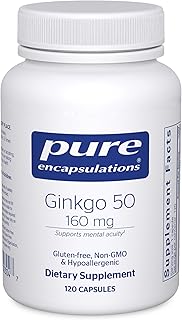
Whether to take ginkgo on an empty stomach or with food is a common practical question, and the answer balances comfort, absorption, and simple consistency.
This post contains affiliate links. If you buy through them, we may earn a small commission at no extra cost to you. This does not influence what we recommend.
Empty Stomach: Pros and Cons
Taking ginkgo on an empty stomach doesn’t meaningfully harm absorption of the water-soluble flavone glycoside portion, but it can increase the likelihood of mild GI discomfort (stomach upset, nausea) in sensitive individuals, which is one of the more commonly reported minor side effects across trials.
With Food: Pros and Cons
Taking ginkgo with a meal, particularly one containing some fat, modestly aids absorption of the fat-soluble terpene lactone compounds and reduces the chance of GI upset. The main downside is simply remembering to time it with meals rather than a fixed clock time, which some people find harder to build into a routine.
Practical Recommendation
For most people, taking ginkgo with breakfast and dinner (matching the common twice-daily trial dosing pattern) is a reasonable default that balances absorption and tolerability. If you experience no GI discomfort taking it on an empty stomach, there’s no strong evidence-based reason to change.
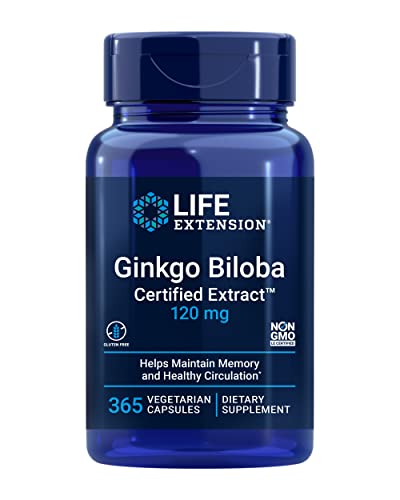

What GI Upset Actually Looks Like, and When to Act
The digestive complaints reported with ginkgo are usually mild and appear early: a vague stomach heaviness, mild nausea in the half hour after a dose, occasionally looser stools. These typically settle within the first week or two, and moving the dose into the middle of a meal rather than just before it is often enough on its own.
A few things are worth treating differently. Symptoms that begin after weeks of comfortable use, rather than at the start, are less likely to be a simple tolerability issue and more likely to be worth investigating, particularly if anything else in your routine changed at the same time. Pain rather than discomfort falls in the same category.
Any sign of gastrointestinal bleeding, including dark or tarry stools, is a different matter entirely and warrants prompt medical attention rather than an adjustment to when you take the capsule. Our page on ginkgo side effects covers what has been reported and at what frequency.
Fitting It Around Coffee, Medication and Other Supplements
For most people the real constraint is not food, it is everything else already attached to breakfast. If your morning already includes coffee, a prescription that requires an empty stomach, and two other supplements, adding a fourth item to the same ten minutes is where adherence usually breaks down.
Prescriptions with explicit timing requirements should anchor the schedule first, because those instructions are generally more specific and better supported than ginkgo’s. Fit ginkgo around them rather than the reverse. Coffee itself carries no documented interaction requiring separation, though our page on ginkgo and caffeine covers what has been looked at in combination.
If a morning slot is genuinely overloaded, moving ginkgo’s first dose to lunch is a reasonable trade. Keeping the daily total and taking it reliably matters more than which meal it attaches to, and no specific meal has been established as superior.
A Simple Two-Week Test
Rather than reasoning about it further, the question is easy to settle personally. Take it your preferred way for a week and note any digestive symptoms, then switch for a second week and note the same thing.
For most people the two weeks read identically, which is a useful result: it means you can pick whichever is easier to keep up and stop thinking about it. For the minority who do get upset on an empty stomach, the difference usually shows up clearly within a few days.
Frequently Asked Questions
Will taking it on an empty stomach reduce effectiveness?
Not dramatically. It may modestly reduce absorption of the fat-soluble terpene lactone portion, but the bigger practical issue for most people is GI tolerability, not effectiveness.
What if I get stomach upset even with food?
Try reducing to a single smaller dose to reassess tolerance, and consult a doctor if discomfort persists, since ongoing GI symptoms shouldn’t simply be pushed through.
Does it matter which meal I take it with?
No specific meal timing is established as superior; consistency (same general time relative to meals each day) matters more than which specific meal.
Important safety note: Ginkgo biloba is often described as a blood thinner. Standardised extract does inhibit platelet aggregation and prolong bleeding time as a pharmacological property[1], but that is a proposed mechanism rather than a confirmed clinical effect: a meta-analysis of 18 randomised trials in 1,985 adults found no significant effect on platelet aggregation, fibrinogen concentration, aPTT or prothrombin time, and did not indicate a higher bleeding risk[2].
A review of controlled studies likewise found that ginkgo did not impair haemostasis or compromise the safety of coadministered aspirin or warfarin, while noting that an idiosyncratic bleeding event cannot be excluded and that isolated case reports do exist[3], including chronic ginkgo use preceding spontaneous subdural haematoma[4].
Those trials were not designed to establish safety in people who are already anticoagulated, so that specific question is open rather than answered. If you take warfarin, aspirin, clopidogrel, or any other blood thinner, or if you have a bleeding disorder or an upcoming surgery, talk to your doctor before starting ginkgo. This applies even to otherwise low-risk uses like memory support.
These statements have not been evaluated by the FDA. This product is not intended to diagnose, treat, cure, or prevent any disease.
References
- EGb 761: ginkgo biloba extract, Ginkor. Drugs in R&D, 2003
- Is there a risk of bleeding associated with standardized Ginkgo biloba extract therapy? A systematic review and meta-analysis. Pharmacotherapy, 2011
- Potential interaction of Ginkgo biloba leaf with antiplatelet or anticoagulant drugs: what is the evidence? Molecular Nutrition & Food Research, 2008
- Spontaneous bilateral subdural hematomas associated with chronic Ginkgo biloba ingestion. Neurology, 1996
These statements have not been evaluated by the Food and Drug Administration. This information is not intended to diagnose, treat, cure, or prevent any disease. Content is for informational purposes only and is not medical advice; consult a qualified healthcare provider before starting any supplement. As an Amazon Associate we earn from qualifying purchases.