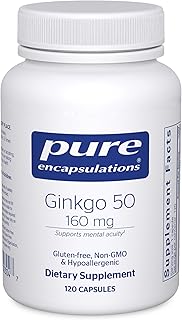
Timing questions come up constantly for a supplement people hope will support daytime mental clarity or circulation. The research doesn’t point to one universally optimal time of day, but there are practical, evidence-informed reasons to favor certain patterns.
This post contains affiliate links. If you buy through them, we may earn a small commission at no extra cost to you. This does not influence what we recommend.
With Food or Without?
Ginkgo extract is generally well tolerated either way, but taking it with a meal containing some fat can modestly aid absorption of the fat-soluble terpene lactone compounds, and it reduces the mild gastrointestinal upset (stomach discomfort, nausea) that a minority of users report on an empty stomach.
Morning vs Evening
Most clinical trial protocols split the daily dose into two administrations, commonly morning and evening, rather than a single large dose. This spacing keeps blood levels of the active compounds more consistent throughout the day rather than one large peak. There’s no strong evidence that morning-only or evening-only dosing meaningfully changes outcomes if the total daily amount matches the studied dose.
Interaction With Sleep
Ginkgo is not a stimulant and does not reliably disrupt sleep for most users, so evening dosing is not inherently problematic the way caffeine-based supplements can be. A small number of users report vivid dreams or mild sleep disturbance; if that happens, shifting the second dose earlier in the day is a reasonable adjustment.
Consistency Beats Optimization
The single largest timing variable in the trial literature is not the hour of day. It is whether participants took the dose every day for the full study period. Where trials found effects at all, those effects accumulated across 12 to 24 weeks of uninterrupted dosing rather than appearing after any one well-timed dose. A schedule you keep imperfectly is worse than a slightly suboptimal schedule you keep exactly.
That reframes the practical question. Rather than asking which hour is theoretically best, pick the two anchor points in your day you never miss, usually breakfast and your evening meal, and attach the doses to those. Anchoring to an existing habit is more reliable than setting an alarm for a time that carries no other meaning in your routine. For the fuller picture on how long that accumulation takes, see our guide to how long ginkgo may take to show effects.
If you miss a dose, skip it and resume at the next scheduled time rather than doubling up. Doubling to catch up pushes a single day’s intake above the studied range for no established benefit, and it is the accumulated exposure across weeks that the research is built around, not any individual day.
Matching Your Schedule to Why You Are Taking It
The reason you started matters more for timing than most timing advice admits. If daytime mental clarity is the goal, keeping both doses inside waking hours, roughly breakfast and late afternoon, means the steadier blood levels line up with the hours you actually care about.
If peripheral circulation in the hands and feet is the reason, there is less argument for weighting toward the daytime, since the effect under study is not tied to alertness. An evenly spaced morning and evening pattern is a reasonable default there.
Neither pattern has direct trial evidence separating it from the other. Both keep the daily total inside the range the research actually constrains, which is the part that matters. Our dosage guide covers what that range is and where it came from.
When Timing Deserves More Attention
A few situations make timing more than a matter of convenience. If you get mild stomach discomfort, moving the dose into the middle of a meal rather than just before it often resolves it without changing the daily total at all. Our page on taking ginkgo with food or on an empty stomach works through that tradeoff in more detail.
If you take other supplements with antiplatelet activity, or any prescription blood thinner, the relevant question is your total daily exposure rather than the clock. Spacing doses further apart across the day does not reduce that combined exposure, so timing is not a workaround for a combination that needs a conversation with your doctor instead.
And if a surgery or dental procedure is scheduled, timing gives way entirely to stopping. Standard surgical guidance is to discontinue ginkgo well beforehand rather than adjust which hour you take it.
Frequently Asked Questions
Can I take my whole daily dose at once instead of splitting it?
Most trial protocols split dosing, but single daily dosing is used in some products and is not established as unsafe. If your product recommends single dosing, that’s reasonable to follow; splitting simply mirrors more of the trial evidence.
Does taking it at night affect sleep?
For most people, no meaningful effect. A minority report vivid dreams; if that happens, move dosing earlier in the day.
Should I take it before or after a workout?
There’s no specific trial evidence tying ginkgo timing to exercise. Taking it with a regular meal, regardless of workout timing, is a reasonable default.
Important safety note: Ginkgo biloba is often described as a blood thinner. Standardised extract does inhibit platelet aggregation and prolong bleeding time as a pharmacological property[1], but that is a proposed mechanism rather than a confirmed clinical effect: a meta-analysis of 18 randomised trials in 1,985 adults found no significant effect on platelet aggregation, fibrinogen concentration, aPTT or prothrombin time, and did not indicate a higher bleeding risk[2].
A review of controlled studies likewise found that ginkgo did not impair haemostasis or compromise the safety of coadministered aspirin or warfarin, while noting that an idiosyncratic bleeding event cannot be excluded and that isolated case reports do exist[3], including chronic ginkgo use preceding spontaneous subdural haematoma[4].
Those trials were not designed to establish safety in people who are already anticoagulated, so that specific question is open rather than answered. If you take warfarin, aspirin, clopidogrel, or any other blood thinner, or if you have a bleeding disorder or an upcoming surgery, talk to your doctor before starting ginkgo. This applies even to otherwise low-risk uses like memory support.
These statements have not been evaluated by the FDA. This product is not intended to diagnose, treat, cure, or prevent any disease.
References
- EGb 761: ginkgo biloba extract, Ginkor. Drugs in R&D, 2003
- Is there a risk of bleeding associated with standardized Ginkgo biloba extract therapy? A systematic review and meta-analysis. Pharmacotherapy, 2011
- Potential interaction of Ginkgo biloba leaf with antiplatelet or anticoagulant drugs: what is the evidence? Molecular Nutrition & Food Research, 2008
- Spontaneous bilateral subdural hematomas associated with chronic Ginkgo biloba ingestion. Neurology, 1996
These statements have not been evaluated by the Food and Drug Administration. This information is not intended to diagnose, treat, cure, or prevent any disease. Content is for informational purposes only and is not medical advice; consult a qualified healthcare provider before starting any supplement. As an Amazon Associate we earn from qualifying purchases.