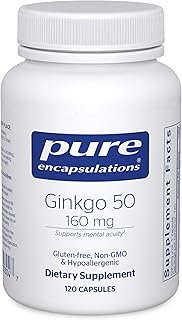
Many women in midlife and menopause explore various supplements to support their well-being. Ginkgo biloba is one such botanical that has garnered interest, particularly for its potential role in cognitive function and other areas.
A common question when considering any supplement is, ‘How long does it take to see results?’ The timeline for potential effects of ginkgo biloba can vary depending on the individual and the specific area of focus, as indicated by research.
Cognitive Function: A Gradual Process
When it comes to cognitive function, such as memory and focus, studies often indicate that any potential effects of ginkgo biloba may not be immediate. Research suggests that consistent use over several weeks or months might be necessary to observe changes. For instance, a systematic review and meta-analysis examining ginkgo’s efficacy for cognitive impairment and dementia included studies where participants used ginkgo for various durations, often several weeks to months, to assess its impact [1].
In individuals experiencing mild cognitive impairment, a randomized open-label clinical trial was designed to compare blood markers of inflammation and oxidative stress over 12 months of EGb 761 treatment [2]. This suggests that researchers are looking at effects over a period of months for cognitive aspects.
Similarly, for individuals who have experienced acute ischemic stroke, studies evaluating ginkgo biloba extract’s potential to improve cognitive and neurological functions have observed effects over periods such as 12 weeks [3] and even 6 months [4]. This reinforces the idea that cognitive support from ginkgo may be a more gradual process rather than an immediate one.
Tinnitus: Observing Changes Over Weeks
Tinnitus, often described as ringing in the ears, is another area where ginkgo biloba has been studied. For individuals with tinnitus, particularly when associated with hearing loss, research has explored the timeline for potential improvements. One clinical randomized trial investigated the effectiveness of ginkgo biloba extract (EGb 761) in association with hearing aids for tinnitus improvement, with observations made over a period of 90 days [5]. This suggests that if ginkgo has an influence on tinnitus, it may become apparent after a few weeks to a couple of months of consistent use.
Vitiligo: Longer-Term Observation for Skin Pigmentation
For skin conditions like vitiligo, which involves the loss of skin pigment, the timeline for observing any potential changes with ginkgo biloba may be longer. A Cochrane systematic review on interventions for vitiligo included studies that explored ginkgo as a potential option. Given the nature of skin repigmentation, any effects would typically be expected to manifest over several months, rather than days or weeks [6].

Acute Ischemic Stroke Recovery: Timelines in Research
In the context of recovery after acute ischemic stroke, studies have examined the timeline for ginkgo biloba’s potential effects on various outcomes. For instance, a randomized controlled trial assessed the antiplatelet effect of ginkgo diterpene lactone meglumine injection in acute ischemic stroke, with observations over 14 days [7]. Other studies investigating improvements in cognitive and neurological functions after ischemic stroke have monitored participants for 12 weeks [3] and 6 months [4]. These varied timelines highlight that the duration to observe effects can depend on the specific physiological or neurological outcome being measured.
General Considerations for Supplement Use
It’s important to remember that individual responses to supplements can vary. Factors such as dosage, individual metabolism, overall health status, and the specific formulation of ginkgo biloba extract can all play a role in how long it might take to observe any effects. Most research on ginkgo biloba, particularly the standardized extract EGb 761, points towards a need for consistent use over weeks to months to assess its potential influence, rather than expecting immediate changes [8].
When considering ginkgo biloba, it’s helpful to approach it with realistic expectations regarding the timeline for potential benefits. As with many botanical supplements, the effects are often subtle and gradual, rather than dramatic or instant. Patience and consistent adherence to a chosen regimen, under professional guidance, are key.

References
- Efficacy and adverse effects of ginkgo biloba for cognitive impairment and dementia: a systematic review and meta-analysis. Journal of Alzheimer’s disease : JAD, 2015
- A randomized, open-label clinical trial in mild cognitive impairment with EGb 761 examining blood markers of inflammation and oxidative stress. Scientific reports, 2023
- Ginkgo biloba extract improved cognitive and neurological functions of acute ischaemic stroke: a randomised controlled trial. Stroke and vascular neurology, 2017
- Ginkgo biloba extract EGb 761(®) improves cognition and overall condition after ischemic stroke: Results from a pilot randomized trial. Frontiers in pharmacology, 2023
- Clinical randomized trial study of hearing aids effectiveness in association with Ginkgo biloba extract (EGb 761) on tinnitus improvement. Brazilian journal of otorhinolaryngology, 2020
- Interventions for vitiligo. The Cochrane database of systematic reviews, 2015
- Antiplatelet effect of ginkgo diterpene lactone meglumine injection in acute ischemic stroke: A randomized, double-blind, placebo-controlled clinical trial. Phytotherapy research : PTR, 2023
- Ginkgo biloba: indications, mechanisms, and safety. The Psychiatric clinics of North America, 2013
These statements have not been evaluated by the Food and Drug Administration. This information is not intended to diagnose, treat, cure, or prevent any disease. Content is for informational purposes only and is not medical advice; consult a qualified healthcare provider before starting any supplement. As an Amazon Associate we earn from qualifying purchases.