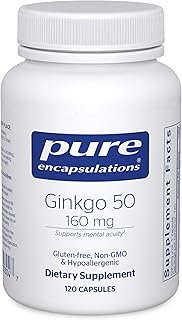
For women navigating midlife and menopause, understanding how the body processes supplements like ginkgo biloba can be an important consideration. Bioavailability refers to the proportion of a substance that enters the circulation when introduced into the body and is able to have an active effect. When it comes to ginkgo biloba, this concept helps us understand which forms might be more readily utilized by the body.
Ginkgo biloba extracts contain various active compounds, primarily ginkgo flavone glycosides and terpene lactones (which include ginkgolides and bilobalide) [1]. The absorption and utilization of these components can vary depending on the preparation and individual factors. This article will explore the current understanding of ginkgo bioavailability forms.
What Influences Ginkgo Biloba Absorption?
The effectiveness of a ginkgo biloba supplement depends significantly on how well its active components are absorbed into the bloodstream. Several factors can influence this process. The specific chemical structure of the ginkgo components plays a role, as does the form in which the extract is delivered. For instance, studies have explored the pharmacokinetics of ginkgo biloba extract, observing its absorption and distribution in the body [2].
The ginkgolides, a group of terpene lactones found in ginkgo, demonstrate good bioavailability following oral administration [3]. Research has also focused on the absorption of other key components, such as ginkgo flavone glycosides, which are often found in standardized extracts [1]. The interaction of ginkgo components with the intestinal environment and metabolic processes can also affect their uptake [4].
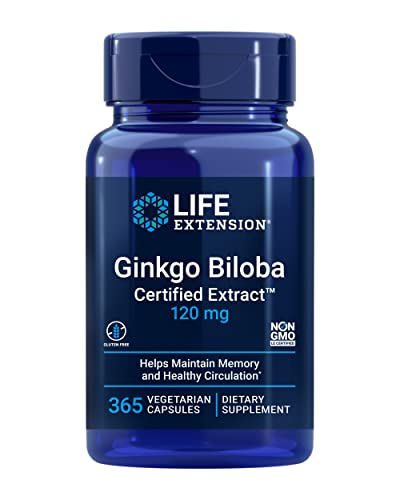
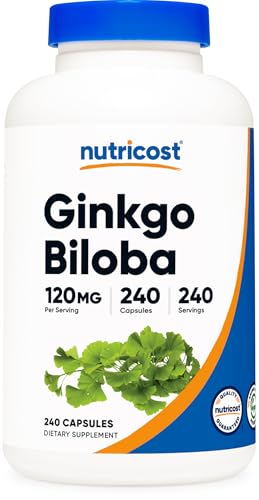
Standardized Extracts: A Common Form
Most ginkgo biloba supplements available today are standardized extracts, often referred to as EGb 761 or similar designations. These extracts are typically concentrated to contain specific percentages of ginkgo flavone glycosides and terpene lactones [1]. This standardization aims to ensure a consistent amount of the active compounds in each dose, which can be important for predictable absorption.
Pharmacokinetic studies have investigated the absorption of these standardized ginkgo biloba extracts. For example, research has examined the oral absorption of ginkgo biloba extract in animal models, tracking its components in the bloodstream [5]. Another study looked at the pharmacokinetic profile of different parts of ginkgo biloba extract in rats, highlighting the absorption of various components [6].
Liposomal Formulations and Enhanced Absorption
Recent advancements in supplement delivery systems have led to the development of liposomal formulations for various compounds, including ginkgo biloba. Liposomes are microscopic lipid vesicles that can encapsulate active ingredients, potentially enhancing their stability and absorption. The idea behind liposomal delivery is that these lipid carriers might improve the passage of compounds across biological membranes, leading to increased bioavailability.

A double-blind, randomized cross-over study compared the absorption of a commercially available ginkgo biloba extract with a liposomal extract called Ginkgosome. The findings suggested that the liposomal formulation, Ginkgosome, demonstrated improved absorption compared to the standard extract [7]. This indicates that specific delivery technologies could be a factor in optimizing ginkgo bioavailability.
Other Forms and Considerations
While standardized extracts and liposomal forms are commonly discussed, ginkgo biloba can also be found in other preparations, such as tinctures or dried leaf forms. However, the concentration and consistency of active compounds in these less standardized forms may vary considerably, potentially impacting their bioavailability [8].
It’s also important to remember that individual differences can influence absorption. Factors such as gut health, metabolism, and the presence of other substances (including medications) can all play a role in how well ginkgo biloba components are absorbed and utilized by the body [9]. For instance, the interaction of ginkgo biloba with other compounds in the body’s metabolic pathways has been explored [4].
References
- Ginkgo biloba: indications, mechanisms, and safety. The Psychiatric clinics of North America, 2013
- Pharmacokinetics and bioavailability of a Ginkgo biloba extract. Journal of ocular pharmacology and therapeutics : the official journal of the Association for Ocular Pharmacology and Therapeutics, 2002
- The bioavailability of ginkgolides in Ginkgo biloba extracts. Planta medica, 1997
- Intestinal mucosal metabolites-guided detection of trace-level ginkgo biloba extract metabolome. Journal of chromatography. A, 2019
- Pharmacokinetic and ocular microdialysis study of oral ginkgo biloba extract in rabbits by UPLC-MS/MS determination. The Journal of pharmacy and pharmacology, 2017
- Interactions of pharmacokinetic profile of different parts from Ginkgo biloba extract in rats. Journal of ethnopharmacology, 2014
- A double-blind, randomised cross-over study to evaluate the absorption of a commercially available Ginkgo biloba extract compared to the liposomal extract Ginkgosome. BMC complementary medicine and therapies, 2022
- Ginkgo biloba–an appraisal. Kathmandu University medical journal (KUMJ), 2004
- Herb-drug interactions. Lancet (London, England), 2000
These statements have not been evaluated by the Food and Drug Administration. This information is not intended to diagnose, treat, cure, or prevent any disease. Content is for informational purposes only and is not medical advice; consult a qualified healthcare provider before starting any supplement. As an Amazon Associate we earn from qualifying purchases.