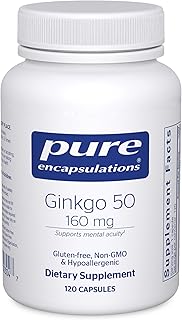
Omega-3 fatty acids and ginkgo biloba are both marketed heavily for cognitive and cardiovascular support, which makes combining them intuitive. It is also the pairing most often flagged as a bleeding concern, on the reasoning that both affect clotting. That reasoning is worth taking apart, because the mechanisms are real but the randomized evidence on each component points somewhere more specific.
This post contains affiliate links. If you buy through them, we may earn a small commission at no extra cost to you. This does not influence what we recommend.
Overlapping Antiplatelet Mechanisms
The mechanisms are genuine. Standardised ginkgo extract inhibits platelet aggregation and prolongs bleeding time in pharmacological terms[1], and omega-3 fatty acids, particularly EPA and DHA at higher doses, have their own documented mild antiplatelet effect through a different pathway. Two mechanisms are not the same thing as two demonstrated effects, though, and that is where the usual reasoning stops too early.
A meta-analysis of 18 randomised trials in 1,985 adults found that ginkgo produced no significant change in ADP-induced platelet aggregation, fibrinogen, activated partial thromboplastin time or prothrombin time, and did not indicate a higher bleeding risk[2]. On the omega-3 side, a meta-analysis of 11 randomised trials in 120,643 patients found no difference in bleeding events against control (rate ratio 1.09, 95% CI 0.91 to 1.31), with hemorrhagic stroke, intracranial bleeding and gastrointestinal bleeding all similar[3]. Adding two effects that were each measured at close to zero does not produce a large one.
What the Limited Combined Research Shows
There is no dedicated trial testing ginkgo plus omega-3 together, so the combination itself has not been measured and the question is formally open rather than answered. What does exist is large randomized evidence on each ingredient separately, and both point the same way. The omega-3 analysis is the more directly useful of the two here, because it prespecified the exact question this pairing raises: it tested whether bleeding risk was modified by background antiplatelet therapy and found that it was not, while risk did track the dose of EPA received[3].
A separate review of the controlled ginkgo literature reached a matching conclusion, that ginkgo does not significantly impact haemostasis nor adversely affect the safety of coadministered aspirin or warfarin, while noting that an idiosyncratic bleeding event in an individual cannot be ruled out[4]. The honest position is that the additive-risk story is weaker than its reputation, not that the combination has been shown to be safe in everyone.
Who Should Be Most Careful
Anyone on prescription blood thinners, anyone with a bleeding disorder, anyone with a planned surgery or dental procedure, and anyone taking high-dose omega-3 (above roughly 3g/day combined EPA/DHA) alongside ginkgo should specifically flag this combination to their doctor [3].
The dose point is the part with the most support behind it: in that 120,643-patient analysis, bleeding risk was associated with the dose of EPA received and not with whether the patient was already on antiplatelet therapy, and the subgroup taking high-dose purified EPA did show a 50% increase in relative bleeding risk, though the absolute increase was 0.6%[3]. None of that randomized evidence describes a reader who is already anticoagulated, which is exactly why that reader should be having the conversation rather than reading an average.
Read Your Omega-3 Label for the Number That Matters
The relevant figure for this combination is the combined EPA and DHA content per serving, and that is frequently not the number printed largest on the bottle. A product advertising 1,000mg per softgel is usually describing the total fish oil, of which the actual EPA and DHA content may be substantially less.
This matters because what dose-response signal exists tracks the active EPA content rather than the weight of oil[3]. Someone taking three softgels of a low-concentration product and someone taking one softgel of a concentrate can be at quite different exposures despite similar-looking labels.
Find the supplement facts panel, locate the EPA and DHA lines, add them, and multiply by your servings per day. That total is the number worth mentioning to a doctor or pharmacist alongside your ginkgo dose, and it is a more useful thing to bring than the product name.
Signs Worth Paying Attention To
Monitoring is worth doing even though the trial evidence has not shown an increase in bleeding events, because a meta-analysis describes an average and you are one person. The practical signal to watch is anything indicating reduced clotting, and it tends to appear in ordinary situations rather than dramatic ones.
Bruises appearing from contact you would not previously have noticed, minor cuts or shaving nicks taking noticeably longer to stop, bleeding gums when brushing, or more frequent nosebleeds are the common early signs. Any of these developing after you begin the combination is worth raising promptly rather than monitoring for weeks.
More serious signs, including blood in urine or stool, unusually heavy or prolonged menstrual bleeding, or any bleeding that will not stop, warrant immediate medical attention. Our page on ginkgo and bleeding risk covers what has been documented.
Reducing the Combined Exposure Without Dropping Either
If you want to keep both, the practical adjustment is usually to the omega-3 rather than the ginkgo, because omega-3 doses vary far more widely between users. Many people take considerably more than any specific reason requires, and moving to a standard dose reduces combined exposure without abandoning the supplement.
The other lever is duration around specific events. A planned procedure is a reason to raise both in advance, and the timelines are worth confirming with whoever is performing it rather than estimating, because that decision belongs to the surgical team and not to a supplement label.
Worth knowing when you have that conversation: a randomised trial of 1,516 cardiac surgery patients given 8 to 10 g of fish oil before surgery found no increase in major perioperative bleeding (odds ratio 0.81, 95% CI 0.53 to 1.24) and fewer units of blood transfused, with the authors calling for reconsideration of routine advice to stop fish oil before cardiac surgery[5]. The standard advice to pause ginkgo before surgery is a separate question and still stands. Our page on pausing ginkgo before surgery covers the general guidance, and the same conversation should include the omega-3.
If you are also on a prescription anticoagulant or antiplatelet, this stops being a self-management question. See our page on ginkgo and anticoagulants, and treat the combination as something to decide with your doctor rather than adjust independently.


Frequently Asked Questions
Is it dangerous to take ginkgo and fish oil together?
Not automatically dangerous for most healthy adults at standard doses. The additive bleeding risk usually assumed for this pairing has not appeared in the randomized evidence for either ingredient, and the largest omega-3 analysis specifically found no link between bleeding and background antiplatelet use[3]. Dose is the part worth respecting, particularly high-dose EPA. It still warrants a conversation with a doctor if you’re on any blood thinner or have surgery planned, because that is the reader the trials do not describe.
Does omega-3 help ginkgo work better for cognition?
There’s no established synergistic cognitive benefit specifically demonstrated in trials combining the two; any cognitive rationale is based on each supplement’s separate, individually mixed evidence base.
What’s a lower-risk way to take both?
Sticking to standard, non-excessive doses of each (rather than high-dose omega-3) and discussing the combination with a doctor if you have any bleeding risk factors or upcoming procedures.
Important safety note: Ginkgo biloba is often described as affecting platelet aggregation, but that is a proposed mechanism rather than a confirmed clinical effect — a meta-analysis of 18 randomised trials in 1,985 adults found no significant effect on platelet aggregation or clotting times, and did not indicate a higher bleeding risk[2].
Isolated case reports do exist, however, and the combination has never been shown to be safe in people who are already anticoagulated. If you take warfarin, aspirin, clopidogrel, or any other blood thinner, or if you have a bleeding disorder or an upcoming surgery, talk to your doctor before starting ginkgo. This applies even to otherwise low-risk uses like memory support.
References
- EGb 761: ginkgo biloba extract, Ginkor. Drugs in R&D, 2003
- Is there a risk of bleeding associated with standardized Ginkgo biloba extract therapy? A systematic review and meta-analysis. Pharmacotherapy, 2011
- Bleeding Risk in Patients Receiving Omega-3 Polyunsaturated Fatty Acids: A Systematic Review and Meta-Analysis of Randomized Clinical Trials. Journal of the American Heart Association, 2024
- Potential interaction of Ginkgo biloba leaf with antiplatelet or anticoagulant drugs: what is the evidence? Molecular Nutrition & Food Research, 2008
- Fish Oil and Perioperative Bleeding. Circulation: Cardiovascular Quality and Outcomes, 2018
These statements have not been evaluated by the FDA. This product is not intended to diagnose, treat, cure, or prevent any disease.
These statements have not been evaluated by the Food and Drug Administration. This information is not intended to diagnose, treat, cure, or prevent any disease. Content is for informational purposes only and is not medical advice; consult a qualified healthcare provider before starting any supplement. As an Amazon Associate we earn from qualifying purchases.