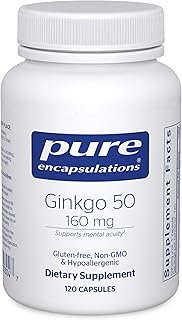
Ready to buy? Check current prices on Amazon and compare deals before you decide.
Are you experiencing those frustrating “tip-of-the-tongue” moments more often, or finding your focus isn’t quite what it used to be? Perhaps you’re noticing changes in circulation, like cold hands and feet, as you navigate perimenopause or simply the natural aging process. You’ve likely heard of Ginkgo Biloba, a popular botanical heralded for its potential to support memory, cognitive function, and even blood flow.
But with so much information circulating, it’s hard to discern what’s genuinely backed by science and what’s simply marketing hype. As of 2026, let’s cut through the noise and examine what the latest research actually shows about Ginkgo Biloba’s benefits, helping you make an informed decision for your health.
**FTC Disclosure:** Please note that this article may contain affiliate links. If you make a purchase through these links, GinkgoHub may earn a commission at no extra cost to you. This helps support our mission to provide evidence-based health information.
Ginkgo Biloba and Blood Thinning: A Critical Safety Consideration
Before discussing any potential benefits, it is paramount to address a significant safety concern: Ginkgo Biloba’s interaction with blood-thinning medications. This is not a minor interaction; it is a real and well-documented effect that can have serious implications.
Ginkgo Biloba’s terpene lactones, particularly the ginkgolides, inhibit platelet-activating factor in laboratory work, and that mechanism is the reason ginkgo carries a blood-thinning reputation at all. It is worth being precise about how far that evidence actually goes. A meta-analysis of 18 randomised controlled trials covering 1,985 adults measured the hemostasis parameters that would have to move for a bleeding risk to be real, and found no significant effect on ADP-induced platelet aggregation, fibrinogen concentration, aPTT or prothrombin time; the authors concluded the data did not indicate a higher bleeding risk from standardised ginkgo extract[1]. A controlled crossover study in healthy volunteers similarly found that ginkgo at recommended doses did not significantly affect clotting status or the pharmacokinetics of warfarin[2].
The concern that remains is a real one, but it comes from a different kind of evidence. Individual case reports have described bleeding events — easy bruising, nosebleeds, prolonged bleeding from minor cuts and, rarely, internal or intracranial hemorrhage — in people taking ginkgo, often alongside an anticoagulant or antiplatelet drug. Case reports cannot establish that ginkgo caused those events, and the controlled trials above did not reproduce the effect. What they do establish is that the combination has not been shown to be safe either, and the consequence of being wrong is severe. That asymmetry, not a demonstrated interaction, is why the precaution below is worth taking seriously.
**If you are currently taking any blood-thinning medication, or have a bleeding disorder, you absolutely must consult your healthcare provider before considering Ginkgo Biloba supplementation.** Your doctor can assess the risks and determine if it’s safe for you, or if alternative strategies are more appropriate. Never discontinue prescribed medication without medical advice.
Ginkgo Biloba for Memory and Cognitive Sharpness: What the Evidence Says
The most common reason individuals, especially women in their mid-forties to sixties, explore Ginkgo Biloba is for its purported benefits on memory and cognitive function. The standardized extract, EGb 761, is the most studied form, containing 24% flavone glycosides and 6% terpene lactones. These compounds are believed to exert neuroprotective and vasodilatory effects.


In Healthy Adults and Age-Related Cognitive Decline
For healthy young to middle-aged adults seeking a “cognitive boost,” the evidence is largely mixed and often inconclusive. While some smaller, short-term studies have reported modest improvements in specific cognitive tasks like attention or working memory, larger, well-designed trials have frequently failed to find significant benefits. A 2026 network meta-analysis of 29 randomised trials in 2,107 healthy adults found that ginkgo — including at the high 240 mg/day dose — did not significantly outperform placebo on working memory, and reported no significant differences in sustained attention, selective attention or processing speed[3]. The improvements, when observed, are often not clinically meaningful.
In older adults experiencing normal age-related cognitive decline, the picture is slightly more nuanced but still not definitive. Some research indicates potential for slight improvements in memory or processing speed, particularly with consistent, long-term use (e.g., 6 months or more) of high-quality EGb 761 extracts. However, these benefits are often subtle and not universally observed across all studies. It’s crucial to manage expectations; Ginkgo is not a “magic bullet” for age-related memory loss.
In Mild Cognitive Impairment (MCI) and Dementia
The research into Ginkgo Biloba’s role in preventing or treating more severe cognitive conditions like Mild Cognitive Impairment (MCI) and Alzheimer’s disease has yielded inconsistent results. The Cochrane review of ginkgo for cognitive impairment and dementia judged the evidence of a predictable, clinically significant benefit “inconsistent and unreliable”[4]. A later meta-analysis restricted to seven trials of EGb 761 in people who already had dementia reached a more favourable result, reporting significant improvements in cognition, activities of daily living and global rating versus placebo over 22-26 weeks[5]. That distinction matters and is easy to lose: treating established dementia and preventing it are different questions with different answers.
On the prevention question the two largest trials ever run are both negative. The Ginkgo Evaluation of Memory (GEM) study randomised 3,069 adults aged 75 or older to 120 mg of EGb 761 twice daily or placebo and followed them for a median of about six years; the hazard ratio for all-cause dementia was 1.12 (95% CI 0.94-1.33, P = .21), with no effect on progression to dementia in participants who already had MCI[6]. The GuidAge trial randomised 2,854 older adults with memory complaints and followed them for five years, finding no reduction in progression to probable Alzheimer’s disease (HR 0.84, 95% CI 0.60-1.18, p = 0.306)[7]. Notably, GuidAge also found that haemorrhagic and cardiovascular event rates did not differ between the ginkgo and placebo groups. Whatever neurobiological effects ginkgo has, they have not translated into preventing dementia.
Ginkgo and Circulation: Supporting Blood Flow, Especially in Perimenopause
Ginkgo Biloba is often promoted for its circulatory benefits, and this is an area where the scientific evidence appears somewhat stronger, particularly for certain conditions. The active compounds in Ginkgo are believed to promote vasodilation (widening of blood vessels) and reduce blood viscosity, thereby improving blood flow.
Peripheral Artery Disease (PAD) and Raynaud’s Phenomenon
Ginkgo Biloba is frequently promoted for Peripheral Artery Disease (PAD), specifically intermittent claudication (pain in the legs during exercise due to poor blood flow), and this is the claim most in need of correcting. An early meta-analysis was encouraging, but the finding did not survive. The current Cochrane review pooled 14 randomised trials in 739 people and found the increase in absolute claudication distance was not statistically significant (P = 0.06), amounting to roughly 64 metres on a flat treadmill with a confidence interval that crosses zero — and the reviewers noted that publication bias had likely inflated even that figure. Their conclusion was explicit: there is no evidence that Ginkgo biloba has a clinically significant benefit for people with peripheral arterial disease[8]. Supervised exercise therapy remains the evidence-backed first step, and ginkgo should not be substituted for medical treatment of PAD.
Similarly, some studies suggest Ginkgo may help alleviate symptoms of Raynaud’s phenomenon, a condition causing spasms in blood vessels, leading to cold and numb fingers and toes. By improving microcirculation, Ginkgo may reduce the frequency and severity of these attacks.

Ginkgo and Perimenopausal Circulation
During perimenopause, many women report experiencing changes in circulation, including increased sensitivity to cold, “brain fog,” and general fatigue, which can be linked to altered blood flow. While direct, large-scale studies specifically on Ginkgo’s impact on perimenopausal circulation are limited, the established mechanisms for improving blood flow could theoretically offer some support.
By enhancing cerebral blood flow, Ginkgo might indirectly contribute to a sense of improved clarity for some women experiencing “brain fog” during this transitional phase. Its peripheral circulatory benefits could also offer relief for cold extremities. However, these are largely extrapolated benefits based on its known actions rather than direct evidence in this specific population. More targeted research is needed here.
Ginkgo for Mood and Well-being
Beyond memory and circulation, some individuals explore Ginkgo for its potential effects on mood, particularly in relation to anxiety and mild depression. The proposed mechanisms involve its ability to modulate neurotransmitters, reduce oxidative stress, and improve cerebral blood flow, all of which can influence mood.
Research in this area is less extensive than for cognition or circulation. Some studies have shown that Ginkgo Biloba may help reduce symptoms of anxiety, especially in generalized anxiety disorder, and may have a mild antidepressant effect. These benefits are often observed in conjunction with improvements in cognitive function. However, Ginkgo should not be considered a primary treatment for clinical depression or anxiety disorders and should always be discussed with a healthcare professional, particularly if you are on other medications.
Understanding Ginkgo Biloba EGb 761 and Quality
When researching Ginkgo Biloba, you will frequently encounter “EGb 761.” This refers to a specific, standardized extract that has been used in the majority of clinical trials. The standardization ensures a consistent concentration of the active compounds: 24% ginkgo flavone glycosides and 6% terpene lactones (ginkgolides and bilobalide).
The quality and consistency of Ginkgo Biloba supplements on the market can vary dramatically. Many products may not contain the specified amounts of active ingredients, or they may contain undesirable contaminants. This variability can significantly impact efficacy and safety.
| Feature | High-Quality EGb 761 Extract | Generic/Unstandardized Ginkgo |
|---|---|---|
| Active Compounds | Standardized: 24% Flavone Glycosides, 6% Terpene Lactones | Variable; often not specified or inconsistent |
| Research Backing | Used in most clinical trials; evidence-based | Limited or no specific research |
| Purity | Often tested for contaminants (e.g., ginkgolic acids below 5 ppm) | May contain higher levels of potentially allergenic ginkgolic acids |
| Dosage | Typically 120-240 mg/day, split into 2-3 doses | Dosage can be misleading without standardization |
What to Look for in a Ginkgo Biloba Supplement
Given the importance of quality, discerning consumers should look for specific characteristics when purchasing Ginkgo Biloba. Focus on products that clearly state they are standardized extracts, ideally to the EGb 761 specification.
When searching online, consider terms like: “standardized ginkgo biloba extract 24/6,” “pure ginkgo biloba supplement EGb 761,” or “third-party tested ginkgo biloba.” Prioritize brands that provide transparency about their manufacturing processes and quality control. Look for products that specify the absence of high levels of ginkgolic acids, which can be allergenic and are reduced in high-quality extracts.

Conclusion and Final Thoughts
Ginkgo Biloba remains one of the most widely used and most heavily studied botanicals in the world, which means the honest summary is unusually well evidenced — and more modest than the marketing. For memory and cognitive sharpness in healthy individuals, the evidence is weak and largely null. For preventing mild cognitive impairment or dementia, the two largest long-term trials found no effect. For peripheral arterial disease, the current Cochrane review found no clinically significant benefit, contrary to how ginkgo is often marketed. The most favourable evidence is narrower than most product pages imply: symptomatic improvement in people who already have dementia, at 240 mg/day of a standardised extract. If you are buying ginkgo, buy it with that expectation rather than the one on the label.
The most critical takeaway is the potential for serious interactions with blood-thinning medications. Always prioritize safety and consult your healthcare provider before adding any new supplement to your regimen, especially if you have pre-existing conditions or are on prescription drugs. When choosing a supplement, opt for a high-quality, standardized extract like EGb 761 to ensure you are getting the studied compounds.
Frequently Asked Questions About Ginkgo Biloba
1. How long does it take for Ginkgo Biloba to work?
For cognitive or circulatory benefits, Ginkgo Biloba typically requires consistent use over several weeks to months to observe any potential effects. Some studies suggest 6-12 weeks for initial changes, with more significant effects potentially seen after 6 months or longer.
2. What is the recommended dosage for Ginkgo Biloba EGb 761?
Most clinical studies use dosages of 120-240 mg per day of standardized EGb 761 extract, often divided into two or three doses. Always follow the specific instructions on your chosen supplement and consult your doctor.
3. Can Ginkgo Biloba help with tinnitus?
While Ginkgo Biloba is sometimes marketed for tinnitus (ringing in the ears), the scientific evidence for its effectiveness is largely mixed and inconsistent. The Cochrane review of ginkgo for tinnitus found the certainty of the evidence ranged from low to very low and reported that the reviewers were unable to draw meaningful conclusions about either benefits or harms[9]. That is a genuine absence of evidence rather than a modest positive effect.
4. Are there any side effects of Ginkgo Biloba?
Ginkgo Biloba is generally well-tolerated, and this is one of the few areas where the reviews broadly agree: a 2025 overview of systematic reviews of EGb 761 across multiple conditions reported that it appears safe, while cautioning that the methodological quality of the underlying reviews was poor[10]. Potential side effects can include headache, dizziness, gastrointestinal upset, and allergic skin reactions. The bleeding question is discussed in full above: controlled trials have not demonstrated an increased bleeding risk, but case reports exist and the combination with prescription blood thinners has not been shown to be safe, so the precaution stands.
5. Can I take Ginkgo Biloba if I’m pregnant or breastfeeding?
Due to insufficient research on its safety in these populations, Ginkgo Biloba is generally not recommended for pregnant or breastfeeding women. Always consult your doctor before taking any supplements during pregnancy or lactation.
6. Does Ginkgo Biloba interact with any other medications besides blood thinners?
Yes, Ginkgo can interact with other medications. It may affect blood sugar levels, potentially interacting with diabetes medications. It can also interact with certain antidepressants (SSRIs) and anticonvulsants. Always provide your healthcare provider with a complete list of all medications and supplements you are taking.
**FDA Disclaimer:** These statements have not been evaluated by the FDA. This product is not intended to diagnose, treat, cure, or prevent any disease.

References
- Is there a risk of bleeding associated with standardized Ginkgo biloba extract therapy? A systematic review and meta-analysis. Pharmacotherapy, 2011
- Effect of ginkgo and ginger on the pharmacokinetics and pharmacodynamics of warfarin in healthy subjects. British Journal of Clinical Pharmacology, 2005
- Comparative effects of Bacopa monnieri and Ginkgo biloba on cognitive functions: A systematic review and network meta-analysis. Phytomedicine, 2026
- Ginkgo biloba for cognitive impairment and dementia. Cochrane Database of Systematic Reviews, 2009
- Efficacy and tolerability of Ginkgo biloba extract EGb 761 in dementia: a systematic review and meta-analysis of randomized placebo-controlled trials. Clinical Interventions in Aging, 2014
- Ginkgo biloba for prevention of dementia: a randomized controlled trial. JAMA, 2008
- Long-term use of standardised Ginkgo biloba extract for the prevention of Alzheimer’s disease (GuidAge): a randomised placebo-controlled trial. The Lancet Neurology, 2012
- Ginkgo biloba for intermittent claudication. Cochrane Database of Systematic Reviews, 2013
- Ginkgo biloba for tinnitus. Cochrane Database of Systematic Reviews, 2022
- Ginkgo biloba leaf extract EGb 761 for the treatment of various diseases: Overview of systematic reviews. Phytomedicine, 2025
These statements have not been evaluated by the Food and Drug Administration. This information is not intended to diagnose, treat, cure, or prevent any disease. Content is for informational purposes only and is not medical advice; consult a qualified healthcare provider before starting any supplement. As an Amazon Associate we earn from qualifying purchases.