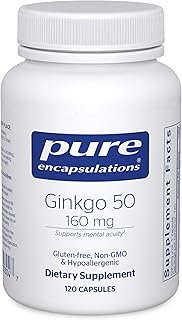
For women exploring botanical options during midlife and menopause, understanding the quality of supplements like ginkgo biloba is paramount. The efficacy and safety of ginkgo biloba products can depend significantly on their purity and the concentration of their active compounds.
This article will explore the importance of rigorous ginkgo quality testing, highlighting what consumers should consider to make informed choices. Knowing how products are evaluated can help ensure you are selecting a supplement that aligns with your wellness goals.
Why Ginkgo Quality Testing Matters
The market for herbal supplements can be complex, and ginkgo biloba is no exception. The quality of ginkgo products can vary widely, impacting their potential benefits. Without proper quality control, products might contain insufficient levels of beneficial compounds or, in some cases, unintended substances.
Comprehensive ginkgo quality testing helps to verify that a product contains the expected ingredients in the right amounts and is free from adulteration. This is especially important for individuals seeking consistent support during midlife and menopause, as product variability can lead to inconsistent experiences.
Key Active Compounds in Ginkgo Biloba
The beneficial properties attributed to ginkgo biloba are largely associated with specific compounds: flavonoid glycosides and terpene lactones. These are considered the primary active components, and their presence and concentration are key indicators of a quality ginkgo extract [1].
Quality testing protocols often focus on quantifying these specific marker compounds. For example, methods such as UPLC (Ultra Performance Liquid Chromatography) fingerprint analysis are used to identify and quantify multiple components, ensuring a comprehensive profile of the ginkgo preparation [2]. Advances in chemical analysis, including techniques for flavonoid analysis, have significantly improved the ability to assess these compounds [3].
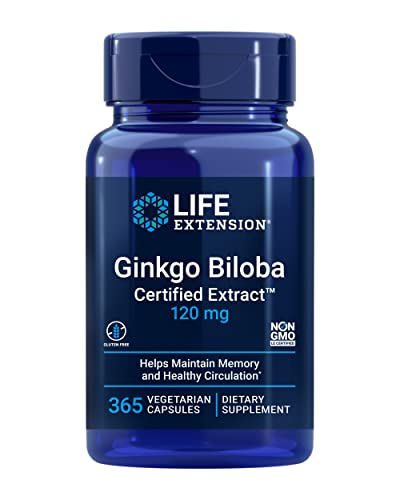
Detecting Adulteration and Contamination
One significant challenge in the herbal supplement market is the potential for adulteration, where cheaper or different plant materials are substituted for genuine ginkgo biloba. Studies have revealed adulteration patterns in ginkgo biloba food supplements on the European market, underscoring the need for vigilant quality control [4].
Rigorous ginkgo quality testing involves techniques to detect such adulteration. For instance, non-targeted metabolomics combined with representative ingredient quantification can be used to evaluate the quality of ginkgo biloba leaves and identify deviations from expected profiles [5]. These methods help ensure that consumers are getting authentic ginkgo biloba and not a substandard or mislabeled product.
Standardized Extracts and Potency Verification
Many ginkgo biloba products are sold as standardized extracts, meaning they are formulated to contain a specific, guaranteed percentage of active compounds, typically 24% flavonoid glycosides and 6% terpene lactones. This standardization aims to provide a consistent dose of the active ingredients.

Effective ginkgo quality testing involves verifying these stated potencies. Analytical methods, including various chromatographic techniques, are crucial for accurately measuring the concentrations of these compounds in the final product [1]. Without such verification, the actual potency of a product could vary significantly, leading to inconsistent experiences for the consumer. Some studies have highlighted differences in pharmaceutical quality among various ginkgo biloba brands, emphasizing the importance of independent testing [6].

Techniques Used in Ginkgo Quality Testing
A range of sophisticated analytical techniques is employed in ginkgo quality testing to ensure purity and potency. These include High-Performance Liquid Chromatography (HPLC) and Ultra Performance Liquid Chromatography (UPLC), which are highly effective for separating, identifying, and quantifying the active components [1][2].
Other methods like mass spectrometry (MS) and nuclear magnetic resonance (NMR) spectroscopy can further confirm the identity and structure of compounds, helping to detect subtle adulterations or contaminants. The combination of these advanced techniques provides a robust approach to quality control, offering a comprehensive assessment of ginkgo biloba preparations [2].
References
- Chemical analysis and quality control of Ginkgo biloba leaves, extracts, and phytopharmaceuticals. Journal of chromatography. A, 2009
- A strategy for quality control of ginkgo biloba preparations based on UPLC fingerprint analysis and multi-component separation combined with quantitative analysis. Chinese medicine, 2022
- Advancement in the chemical analysis and quality control of flavonoid in Ginkgo biloba. Journal of pharmaceutical and biomedical analysis, 2015
- Ginkgo biloba Food Supplements on the European Market – Adulteration Patterns Revealed by Quality Control of Selected Samples. Planta medica, 2018
- Quality evaluation of ginkgo biloba leaves based on non-targeted metabolomics and representative ingredient quantification. Journal of chromatography. B, Analytical technologies in the biomedical and life sciences, 2023
- Pharmaceutical quality of different Ginkgo biloba brands. The Journal of pharmacy and pharmacology, 2002
These statements have not been evaluated by the Food and Drug Administration. This information is not intended to diagnose, treat, cure, or prevent any disease. Content is for informational purposes only and is not medical advice; consult a qualified healthcare provider before starting any supplement. As an Amazon Associate we earn from qualifying purchases.