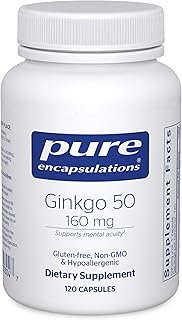
Ready to buy? Check current prices on Amazon and compare deals before you decide.
As you navigate the dynamic landscape of midlife, particularly between 45 and 60, questions about maintaining cognitive sharpness and optimal circulation often come to the forefront. You might be researching natural approaches to support memory, combat the brain fog associated with perimenopause, or simply seeking ways to enhance overall vitality. Ginkgo biloba, with its long history of traditional use, frequently emerges as a prominent contender in this quest, promising benefits for both mind and body.
But how does Ginkgo biloba truly compare to other well-regarded alternatives, both natural and conventional? And critically, what are the safety considerations, especially if you are already managing other health conditions or taking medications? This comprehensive guide aims to provide an evidence-based comparison, helping you make informed decisions about incorporating Ginkgo biloba into your health regimen in 2026.
FTC Disclosure: Please note that this article contains affiliate links. If you make a purchase through these links, GinkgoHub may earn a commission at no extra cost to you. We only recommend products and types of products that we believe are genuinely beneficial and align with our editorial standards.
Ginkgo Biloba EGb 761: Understanding the Standardized Extract
When discussing Ginkgo biloba for health benefits, it is crucial to specify the extract type. The most extensively researched and clinically tested form is EGb 761, a highly standardized extract derived from the leaves of the Ginkgo biloba tree. This standardization ensures a consistent concentration of active compounds, primarily ginkgo flavone glycosides (22-27%) and terpene lactones (5-7%), including ginkgolides and bilobalide.
These specific compounds are believed to be responsible for Ginkgo’s purported pharmacological actions. They act as antioxidants, protect nerve cells, and improve blood flow, particularly microcirculation. Non-standardized or poorly formulated Ginkgo products may not offer the same efficacy or safety profile.

Ginkgo for Memory and Cognitive Sharpness: A Balanced Perspective
Many women in their mid-40s to 60s report concerns about “brain fog,” mild memory lapses, or a general decline in cognitive quickness. Ginkgo biloba is often marketed as a solution for these issues, and indeed, some research supports its role in certain cognitive domains.
Ginkgo’s Mechanism and Evidence
The proposed cognitive benefits of Ginkgo EGb 761 stem from its ability to enhance cerebral blood flow, reduce oxidative stress, and modulate neurotransmitter systems. Improved blood flow to the brain can ensure a more consistent supply of oxygen and nutrients, which are vital for neuronal function.
Studies on healthy, younger adults have generally shown mixed or modest effects on memory and executive function. However, research focusing on older adults experiencing age-associated cognitive decline or mild cognitive impairment (MCI) has yielded more promising, though not universally conclusive, results. Some meta-analyses suggest that Ginkgo EGb 761, particularly at doses of 240 mg per day, may slightly improve attention, memory, and executive function in individuals with MCI over extended periods.

Comparing Ginkgo to Other Cognitive Enhancers
When considering alternatives for cognitive support, both natural and pharmaceutical options exist. Pharmaceutical interventions for significant cognitive decline, such as cholinesterase inhibitors (e.g., donepezil), are typically reserved for diagnosed conditions like Alzheimer’s disease and operate through different mechanisms, primarily by increasing acetylcholine levels in the brain. For mild age-related cognitive concerns, Ginkgo’s profile is often compared to other natural supplements.
| Supplement | Primary Mechanism | Cognitive Evidence (General) | Notes |
|---|---|---|---|
| Ginkgo Biloba (EGb 761) | Improved cerebral blood flow, antioxidant, neuroprotection | Mixed for healthy adults; modest for MCI | Most studied herbal for cognition |
| Omega-3 Fatty Acids (DHA/EPA) | Brain structure, anti-inflammatory, neurotransmitter function | Supportive for overall brain health; may slow decline | Essential fatty acids; often combined with Ginkgo |
| Bacopa Monnieri | Neurotransmitter modulation, antioxidant, adaptogenic | Supports memory recall and learning in some studies | Traditional Ayurvedic herb |
| L-Theanine | Increases alpha brain waves, modulates neurotransmitters | Promotes relaxed alertness, may improve attention | Found in green tea; often combined with caffeine |
| Lion’s Mane Mushroom | Nerve Growth Factor (NGF) support | Preliminary studies suggest potential for cognitive function | Emerging research, more human trials needed |
Lifestyle factors like regular exercise, a balanced diet (such as the Mediterranean diet), adequate sleep, and mental stimulation consistently demonstrate robust benefits for cognitive health, often surpassing the individual impact of any single supplement. Ginkgo can be seen as a complementary tool, not a standalone solution, for maintaining cognitive sharpness.
Ginkgo and Circulation Support, Especially During Perimenopause
Beyond cognitive function, Ginkgo biloba is widely recognized for its potential to support circulation. This aspect is particularly relevant for women experiencing perimenopausal symptoms, where fluctuations in hormones can sometimes impact vascular health and lead to discomforts like cold extremities or even contribute to certain types of headaches.
Vascular Effects of Ginkgo
The terpene lactones in EGb 761, particularly ginkgolides, are known to inhibit platelet-activating factor (PAF). PAF is a potent mediator of inflammation, blood clotting, and bronchoconstriction. By inhibiting PAF, Ginkgo can contribute to improved blood fluidity and microcirculation, meaning better blood flow to the smallest capillaries throughout the body.
This improved microcirculation can be beneficial for various conditions. Peripheral artery disease is the circulation claim most often repeated for ginkgo, and it is worth stating plainly that it did not hold up: a Cochrane review of 14 trials in 739 participants found the increase in claudication distance was not statistically significant and amounted to roughly 64 metres on a flat treadmill, concluding there is “no evidence that Ginkgo biloba has a clinically significant benefit for patients with peripheral arterial disease”[1]. Raynaud’s phenomenon has been studied far less, and remains genuinely open rather than supported. While not a cure, it can be a supportive measure.
Perimenopause and Circulatory Health
During perimenopause, declining estrogen levels can impact vascular elasticity and endothelial function. While Ginkgo is not a direct hormonal treatment, its circulatory benefits could indirectly support overall well-being during this transitional phase. For example, some women report improvements in mild headaches or reduced feelings of sluggishness that might be linked to suboptimal circulation.
Alternatives for Circulatory Support
Other natural options for circulatory health include hawthorn for cardiovascular support, cayenne pepper for its vasodilatory effects, and nattokinase for fibrinolytic activity (breaking down blood clots). However, each has its own safety profile and potential interactions. Conventional medical approaches for significant circulatory issues often involve prescribed medications like antiplatelet drugs or vasodilators, which carry more potent effects and potential side effects.
Ginkgo Biloba and Blood Thinning: A Critical Safety Consideration
Perhaps the most important safety aspect of Ginkgo biloba, particularly for women over 45 who may be on multiple medications, is its potential interaction with blood-thinning agents. This interaction is real, well-documented, and must be taken very seriously.

The Mechanism of Interaction
As mentioned, Ginkgo biloba, specifically its terpene lactones, can inhibit platelet-activating factor (PAF). Platelets are tiny blood cells that help your body form clots to stop bleeding. By inhibiting PAF, Ginkgo can reduce platelet aggregation, essentially making platelets less “sticky.” That is the mechanism people cite when they say ginkgo “thins the blood.” It is worth separating the mechanism from the outcome: a meta-analysis of 18 randomised controlled trials in 1,985 adults found no significant effect of standardised ginkgo extract on ADP-induced platelet aggregation, fibrinogen, aPTT or prothrombin time, and concluded that the data “did not indicate a higher bleeding risk”[2], and two crossover studies found no effect on clotting status or on warfarin[3][4].
Who is at Risk?
The group with something real at stake is people already taking anticoagulants (e.g., warfarin, dabigatran, rivaroxaban, apixaban) or antiplatelet drugs (e.g., aspirin, clopidogrel). The honest position is not that ginkgo has been shown to make them bleed — the controlled trials above argue against that — but that the combination has never been shown to be safe in exactly this population, a handful of case reports exist[5], and the cost of being wrong is a bleed rather than a wasted purchase. That asymmetry, not a demonstrated interaction, is the reason to take it seriously. The same reasoning applies to routine ibuprofen or naproxen use.
Symptoms of increased bleeding risk can include easy bruising, nosebleeds, prolonged bleeding from cuts, or, in severe cases, internal bleeding. It is imperative to discuss Ginkgo supplementation with your healthcare provider if you are on any blood-thinning medication or have a bleeding disorder.
What to Do If You are on Anticoagulants
If you are currently taking anticoagulants, the general recommendation from medical professionals is still to avoid Ginkgo biloba supplements unless your prescriber clears it. The reasoning is one of asymmetry rather than proof: the demonstrated benefit of ginkgo is modest at best, so there is very little upside to weigh against an unquantified but potentially serious downside. Your doctor may suggest alternative strategies for cognitive or circulatory support. Never discontinue prescribed medication or start new supplements without consulting your doctor.
Choosing a Quality Ginkgo Biloba Supplement
If, after consulting with your healthcare provider, you decide Ginkgo biloba is right for you, selecting a high-quality supplement is paramount. The market is saturated with products, and not all are created equal.
What to Look For
Always look for products that clearly state they contain a standardized extract, ideally EGb 761 or an equivalent. The label should specify the percentage of ginkgo flavone glycosides (typically 24%) and terpene lactones (typically 6%). This ensures you are getting the active compounds that have been studied in clinical trials. Reputable brands often have third-party certifications for purity and potency.
Amazon Affiliate Product Types
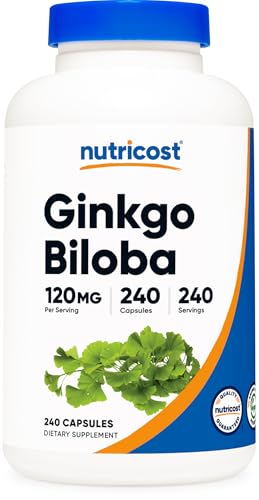
When searching for Ginkgo biloba on platforms like Amazon, focus your search on specific product characteristics rather than just brand names. Look for terms such as: “standardized Ginkgo biloba extract 24% flavone glycosides 6% terpene lactones,” “Ginkgo biloba EGb 761 equivalent,” or “Ginkgo biloba 120mg high potency.” These search terms will help you filter for products that align with the clinically studied forms of Ginkgo.
Conclusion: An Evidence-Graded Decision
Ginkgo biloba, specifically the EGb 761 extract, presents a nuanced profile. For women aged 45-60 seeking support for mild age-related cognitive decline or general circulatory enhancement, it may offer modest benefits, particularly when taken consistently over time. Its antioxidant and microcirculatory effects are well-established.

However, it is not a magic bullet, and its cognitive benefits are often subtle and less pronounced than those achieved through comprehensive lifestyle interventions. Crucially, the potential for interaction with blood-thinning medications is a significant safety concern that necessitates a thorough discussion with your healthcare provider before beginning supplementation. Always prioritize your safety and informed medical advice.
Frequently Asked Questions (FAQ)
How long does it take for Ginkgo Biloba to work for memory?
Clinical studies often show effects after consistent use for several weeks to months, typically 6 to 12 weeks. Ginkgo’s benefits are generally gradual, not immediate. Individual results may vary.
Can Ginkgo Biloba help with perimenopause symptoms other than circulation?
While Ginkgo’s primary benefits are related to cognition and circulation, improved microcirculation might indirectly alleviate some perimenopausal discomforts like mild headaches. It is not a hormonal therapy and does not directly address hot flashes or mood swings related to hormone fluctuations.
Is it safe to take Ginkgo Biloba with aspirin?
It is generally not recommended without medical supervision. To be accurate about why: controlled trials have not shown that ginkgo measurably affects clotting[2], but the combination has not been shown to be safe either, and the downside of being wrong on a blood thinner is severe. Consult your doctor before combining supplements and medications.
What is the recommended daily dose of Ginkgo Biloba EGb 761?
For cognitive support, doses of 120 mg to 240 mg per day, often divided into two or three doses, have been used in clinical trials. It is important to follow the specific instructions on your chosen product and consult your healthcare provider.
Are there any common side effects of Ginkgo Biloba?
When taken at recommended doses, Ginkgo biloba is generally well-tolerated. Possible side effects are usually mild and can include headache, dizziness, upset stomach, or allergic skin reactions. The most discussed concern is bleeding when combined with blood thinners — a risk that controlled trials have not actually demonstrated[2], but which has not been excluded in people already anticoagulated.
Can Ginkgo Biloba prevent Alzheimer’s disease?
No. The Ginkgo Evaluation of Memory study randomised 3,069 adults aged 75 and over to 120 mg of EGb 761 twice daily or placebo and followed them for a median of 6.1 years; the hazard ratio for all-cause dementia was 1.12 (95% CI 0.94–1.33), and there was no effect on progression to dementia among participants who already had mild cognitive impairment[6]. A Cochrane review concluded that the evidence for a predictable, clinically significant benefit in dementia or cognitive impairment is “inconsistent and unreliable”[7].
These statements have not been evaluated by the FDA. This product is not intended to diagnose, treat, cure, or prevent any disease.
References
- Ginkgo biloba for intermittent claudication. Cochrane Database of Systematic Reviews, 2013
- Is there a risk of bleeding associated with standardized Ginkgo biloba extract therapy? A systematic review and meta-analysis. Pharmacotherapy, 2011
- Effect of ginkgo and ginger on the pharmacokinetics and pharmacodynamics of warfarin in healthy subjects. British Journal of Clinical Pharmacology, 2005
- Investigation of the effects of herbal medicines on warfarin response in healthy subjects: a population pharmacokinetic-pharmacodynamic modeling approach. Journal of Clinical Pharmacology, 2006
- Herb-drug interactions. The Lancet, 2000
- Ginkgo biloba for prevention of dementia: a randomized controlled trial. JAMA, 2008
- Ginkgo biloba for cognitive impairment and dementia. Cochrane Database of Systematic Reviews, 2009
These statements have not been evaluated by the Food and Drug Administration. This information is not intended to diagnose, treat, cure, or prevent any disease. Content is for informational purposes only and is not medical advice; consult a qualified healthcare provider before starting any supplement. As an Amazon Associate we earn from qualifying purchases.