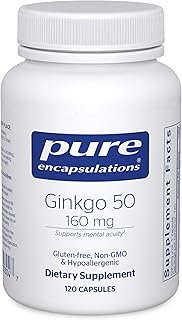
As women navigate the hormonal shifts of perimenopause, many seek ways to support cognitive function, particularly memory. Two supplements often discussed in this context are Ginkgo biloba and phosphatidylserine. Understanding their individual properties and how they might interact can help inform choices.
This article will explore the current evidence surrounding Ginkgo biloba and phosphatidylserine, both individually and in combination, regarding their potential roles in supporting memory. We will focus on the research available and provide a balanced perspective on their use.
Understanding Ginkgo Biloba and its Cognitive Role
Ginkgo biloba, derived from the leaves of the ginkgo tree, is one of the most widely used herbal supplements. It has been investigated for its potential effects on various aspects of health, including cognitive function [1]. The standardized extract, EGb 761, is often used in research.
Historically, Ginkgo biloba has been considered a potential ‘cognitive enhancer’ [2]. Some research has explored its effects on memory and other cognitive measures, particularly in the context of age-related cognitive changes. However, the overall evidence for its cognitive benefits, especially in healthy individuals, has been mixed [2]. For instance, trials for mild-to-moderate dementia have provided insights over the past several years [3].
When considering Ginkgo biloba for perimenopausal memory support, it’s important to note that much of the research has focused on older populations or individuals with cognitive impairment. While some studies suggest potential benefits, the direct evidence specifically for memory support in healthy perimenopausal women is not as robust. A systematic review and network meta-analysis has also compared Ginkgo biloba with other cognitive supplements like Bacopa monnieri [4].

What is Phosphatidylserine and How Might it Support Memory?
Phosphatidylserine (PS) is a phospholipid that is a natural component of cell membranes, particularly abundant in the brain. It plays a role in various cellular functions, including cell signaling and neuronal communication. Due to its presence and function in brain cells, phosphatidylserine has been investigated for its potential to support cognitive health.
Supplementation with phosphatidylserine is thought to potentially support brain health by maintaining cellular integrity and facilitating neurotransmitter release. While research on phosphatidylserine often focuses on age-related cognitive decline, its potential role in supporting memory and cognitive function more broadly is an area of interest.
Unlike some other supplements, phosphatidylserine is a structural component of brain cells. This fundamental role suggests a direct influence on brain function, making it a subject of interest for those looking to support cognitive performance during periods of change, such as perimenopause.

Ginkgo Biloba and Phosphatidylserine: A Combined Approach
Some research has explored the effects of combining Ginkgo biloba with phosphatidylserine, hypothesizing that these two compounds might offer synergistic or complementary benefits for cognitive function. This approach aims to leverage the potential benefits of both ingredients. One study investigated the acute cognitive effects of a standardized Ginkgo biloba extract complexed with phosphatidylserine [5].

Another study explored a nutraceutical supplement containing phosphatidylserine, Ginkgo biloba, vitamin E, and pyridoxine, observing an improvement of short-term memory performance in aged beagles [6]. While this particular study was in animals, it points to the rationale behind combining these ingredients. More recently, two exploratory randomized trials examined the health benefits of a standardized Ginkgo biloba extract associated with phosphatidylserine in alleviating mental stress and cognitive performance [7].
The rationale for combining Ginkgo biloba and phosphatidylserine often rests on the idea that Ginkgo may influence cerebral blood flow and antioxidant activity, while phosphatidylserine directly supports neuronal membrane structure and function. This dual approach could theoretically offer a more comprehensive strategy for cognitive support compared to using either supplement alone.
Which is ‘Better’ for Memory in Perimenopause?
When considering ‘better’ between Ginkgo biloba and phosphatidylserine for memory during perimenopause, the evidence suggests that a direct comparison is complex, and the optimal choice may depend on individual needs and the specific research available. There isn’t a definitive study directly comparing Ginkgo biloba versus phosphatidylserine head-to-head for memory in healthy perimenopausal women.
Research has explored both ingredients individually and in combination. While some studies suggest potential benefits for Ginkgo biloba, particularly in specific formulations and contexts [5][7], the evidence for its cognitive enhancement in healthy individuals, including perimenopausal women, can be mixed [2]. Phosphatidylserine, as a fundamental component of brain cells, also holds promise, and its combination with Ginkgo biloba has shown interesting results in some studies [6][7].
Given the current moderate strength of evidence for this topic, it’s difficult to definitively state one is ‘better’ than the other for memory in perimenopause. The most promising results often emerge from studies involving combinations of these ingredients, suggesting a potential synergistic effect [5][7]. Individuals might consider the combined approach if they are exploring these supplements for cognitive support.
References
- The lowdown on Ginkgo biloba. Scientific American, 2003
- Ginkgo biloba: A Cognitive Enhancer?. Psychological science in the public interest : a journal of the American Psychological Society, 2002
- EGb761 Trials for Mild-to-Moderate Dementia-What Have We Learned in the Past 18 years?. American journal of therapeutics, 2024
- Comparative effects of Bacopa monnieri and Ginkgo biloba on cognitive functions: A systematic review and network meta-analysis. Phytomedicine : international journal of phytotherapy and phytopharmacology, 2026
- Acute cognitive effects of standardised Ginkgo biloba extract complexed with phosphatidylserine. Human psychopharmacology, 2007
- Improvement of short-term memory performance in aged beagles by a nutraceutical supplement containing phosphatidylserine, Ginkgo biloba, vitamin E, and pyridoxine. The Canadian veterinary journal = La revue veterinaire canadienne, 2008
- Health Benefits of a Standardized Ginkgo biloba Extract Associated With Phosphatidylserine in Alleviating Mental Stress and Cognitive Performance: Results From Two Exploratory Randomized Trials. Food science & nutrition, 2026
These statements have not been evaluated by the Food and Drug Administration. This information is not intended to diagnose, treat, cure, or prevent any disease. Content is for informational purposes only and is not medical advice; consult a qualified healthcare provider before starting any supplement. As an Amazon Associate we earn from qualifying purchases.