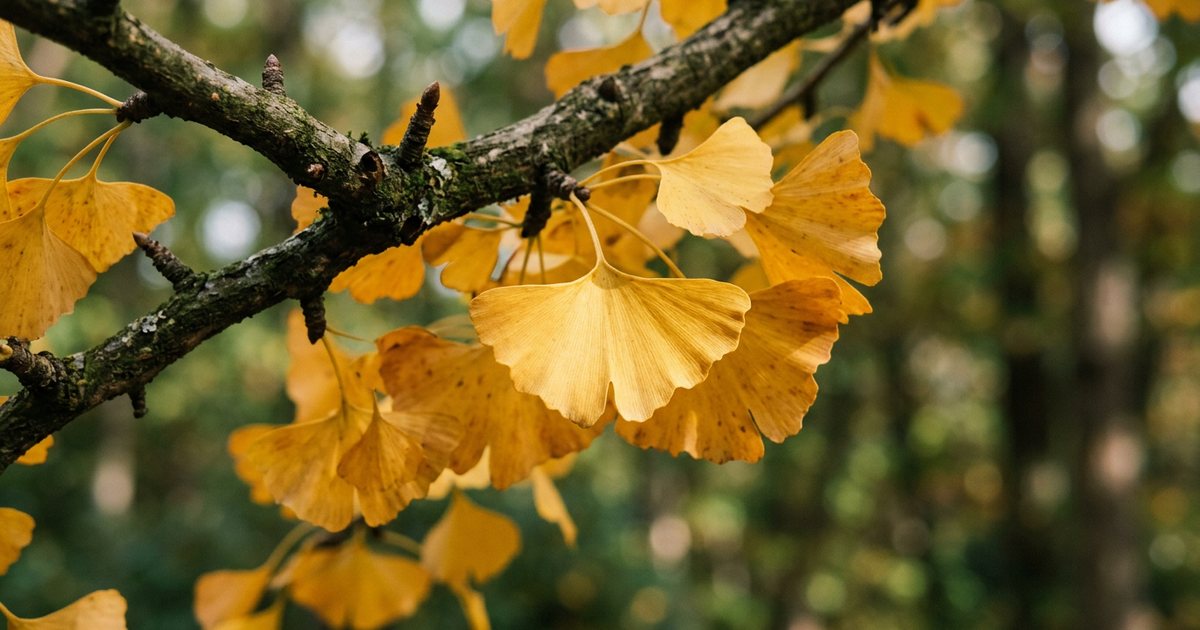
Ginkgo biloba, often referred to as a ‘living fossil,’ has a remarkably long history, predating many other plant species. Its unique fan-shaped leaves and resilience have captured human interest for centuries, particularly in traditional health practices.
While modern scientific inquiry into ginkgo is relatively recent, the plant’s journey from ancient botanical wonder to a subject of contemporary research is deeply rooted in traditional uses. This article explores the historical context and ginkgo traditional uses, offering a glimpse into how it has been valued over time.
A Tree of Ancient Origins: The Ginkgo’s Long History
The Ginkgo biloba tree is unique, considered the last surviving species of an ancient order of plants that dates back millions of years. Its exceptional longevity and distinct appearance have made it a subject of veneration in many cultures, particularly in East Asia. The tree’s resilience has allowed it to persist through vast geological periods, earning its ‘living fossil’ moniker.
For centuries, ginkgo trees have been cultivated in temples and gardens, particularly in China, Japan, and Korea, often symbolizing longevity and endurance. This long-standing cultural presence laid the groundwork for its eventual integration into traditional health practices.
Ginkgo Traditional Uses in Ancient Chinese Medicine
The ginkgo tree has a documented history of use in traditional Chinese medicine spanning thousands of years. Early texts describe the use of various parts of the plant, including the leaves and nuts, for a range of purposes. The leaves, in particular, were often prepared as teas or extracts.
Traditional practitioners utilized ginkgo for its perceived properties related to circulation and respiratory health. It was also traditionally associated with supporting cognitive function and overall well-being. It’s important to note that these traditional applications were based on empirical observation and ancient medical theories, rather than modern scientific methodology [1].
Beyond the Leaves: Traditional Uses of Ginkgo Nuts
While modern interest often focuses on ginkgo leaf extracts, the nuts of the Ginkgo biloba tree also held a significant place in traditional practices. In traditional Chinese medicine, ginkgo nuts (often called ‘silver apricots’) were consumed, typically after cooking, and were believed to offer various health benefits, particularly for respiratory support and bladder function. However, raw ginkgo nuts contain compounds that can be toxic, and traditional preparation methods aimed to mitigate these risks.
The use of ginkgo nuts highlights the comprehensive approach of traditional medicine, where different parts of a plant were valued for distinct properties. While the nuts are less commonly used in modern supplements, their historical use is a testament to the plant’s multifaceted role in ancient health practices.
Ginkgo’s Journey to the West and Modern Research
Ginkgo biloba eventually made its way to the Western world, initially as an ornamental tree. Its unique botanical characteristics fascinated botanists, and by the 18th century, it was being cultivated in European gardens. The medicinal interest in ginkgo, particularly its leaves, began to grow in the 20th century, spurred by observations of its traditional uses [2].
The development of standardized ginkgo leaf extracts, such as EGb 761, marked a significant shift from traditional whole-plant use to a more scientifically investigated approach [2]. This transition paved the way for modern research into ginkgo’s potential effects, moving beyond anecdotal evidence to controlled studies. While early research focused on cognitive support, ongoing studies explore other areas, such as its potential for inflammatory skin conditions [3] and its components like ginkgetin in relation to inflammation and senescence [4]. Other components, like isorhamnetin, are also being studied for their pharmacological effects [5].
It is important to remember that while traditional uses provide a historical context, they do not constitute scientific proof of efficacy. Modern research aims to identify and validate potential benefits using rigorous methodologies.
Connecting Traditional Wisdom with Emerging Science
The historical understanding of ginkgo’s potential to support various bodily functions has, in some ways, informed the direction of modern scientific inquiry. For example, traditional insights into ginkgo’s role in supporting circulation may have contributed to its investigation for cognitive health in modern studies [6]. Similarly, traditional applications for inflammation may relate to current research exploring ginkgo’s potential in inflammatory skin diseases [3] and its components like ginkgetin in alleviating inflammation [4].
While there is emerging research on ginkgo for conditions such as anxiety [7], depression [8], and even hair growth [9], these are distinct from its traditional applications and represent areas of ongoing scientific exploration. The bridge between ancient wisdom and contemporary science is complex, with traditional uses offering clues that modern research then attempts to validate or understand through new lenses. It’s crucial to differentiate between historical practice and scientifically supported evidence.

References
- Rethinking Ginkgo biloba L.: Medicinal uses and conservation. Pharmacognosy reviews, 2015
- A brief history of EGb 761 and its therapeutic uses. Pharmacopsychiatry, 2003
- From traditional medicine to nanomedicine: potential of Ginkgo biloba extracts in treating inflammatory skin diseases. RSC medicinal chemistry, 2024
- Ginkgetin Alleviates Inflammation and Senescence by Targeting STING. Advanced science (Weinheim, Baden-Wurttemberg, Germany), 2025
- Isorhamnetin: A review of pharmacological effects. Biomedicine & pharmacotherapy = Biomedecine & pharmacotherapie, 2020
- Nootropic Herbs, Shrubs, and Trees as Potential Cognitive Enhancers. Plants (Basel, Switzerland), 2023
- Medicinal herbs for the treatment of anxiety: A systematic review and network meta-analysis. Pharmacological research, 2022
- Plants with Potential Importance in Supporting the Treatment of Depression: Current Trends, and Research. Pharmaceuticals (Basel, Switzerland), 2024
- Hair-growth promoting effect and anti-inflammatory mechanism of Ginkgo biloba polysaccharides. Carbohydrate polymers, 2022
These statements have not been evaluated by the Food and Drug Administration. This information is not intended to diagnose, treat, cure, or prevent any disease. Content is for informational purposes only and is not medical advice; consult a qualified healthcare provider before starting any supplement. As an Amazon Associate we earn from qualifying purchases.