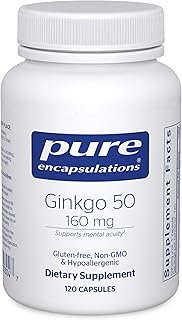
Navigating health choices during midlife and menopause often involves considering various supplements. Ginkgo biloba is a popular botanical, and understanding how to select a quality product is key to making informed decisions for your well-being.
One vital aspect of choosing any botanical supplement, including ginkgo biloba, is verifying its quality and authenticity. This often involves looking for products that have undergone independent, third-party testing to help ensure what’s on the label is what’s in the bottle.
What is Ginkgo Biloba and Why is Quality Important?
Ginkgo biloba is an ancient tree, and extracts from its leaves are commonly used in supplements. These extracts contain compounds like flavonoids and terpene lactones, which are considered the primary active components [1]. The quality of a ginkgo biloba supplement directly relates to the concentration and balance of these specific compounds, as well as the absence of unwanted substances.
The careful chemical analysis and quality control of ginkgo biloba leaves, extracts, and finished products are essential to ensure a consistent and reliable supplement [1][2][3]. Without proper quality control, there’s a risk of variability in the product, which can affect its overall profile and suitability.
For women considering ginkgo biloba during midlife or menopause, having confidence in the product’s quality can be an important part of their personal health approach. Knowing that a supplement has been rigorously tested helps provide reassurance about its contents.
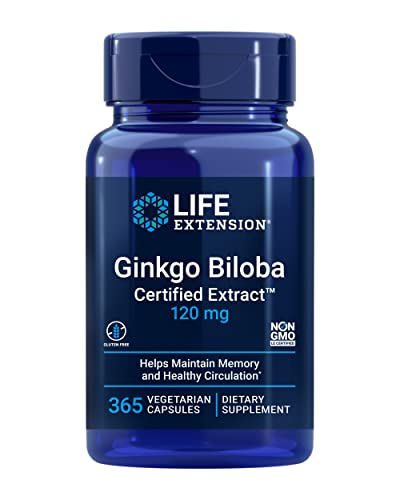

The Challenge of Adulteration in Botanical Supplements
Unfortunately, the botanical supplement market can sometimes face challenges with product adulteration. This means that a product might contain ingredients not listed on the label, or the listed ingredients may be present in different amounts than advertised. This issue has been observed in various botanical supplements, including ginkgo biloba [4].
Studies have specifically identified patterns of adulteration in ginkgo biloba food supplements available on the European market [5]. Such adulteration can involve substituting ginkgo extract with less expensive or unrelated plant materials, or even adding synthetic compounds. Researchers have developed methods to detect such adulteration in ginkgo biloba products [6][7][8].
This potential for adulteration highlights why consumers need to be vigilant. Without robust testing, it can be difficult for an individual to know if they are truly getting a genuine ginkgo biloba product with the expected phytochemical profile.
What is Third-Party Testing and Why is it Essential?
Third-party testing refers to the evaluation of a product by an independent organization that has no financial ties to the supplement manufacturer. This independence is crucial because it helps ensure unbiased assessment of the product’s quality, purity, and potency.

For ginkgo biloba, third-party testing typically involves laboratory analysis to confirm several key aspects: identity (is it truly ginkgo biloba?), purity (is it free from contaminants like heavy metals, pesticides, or undeclared fillers?), and potency (does it contain the advertised levels of active compounds like ginkgo flavone glycosides and terpene lactones?) [1][2].
Reputable third-party testing organizations use advanced analytical techniques, such as chromatography and mass spectrometry, to accurately assess the chemical profile of ginkgo products [7][3][9]. This level of scrutiny helps to identify potential adulteration or inconsistencies that might otherwise go unnoticed, offering an additional layer of consumer confidence.
How to Identify Reputable Ginkgo Biloba Supplements
When choosing a ginkgo biloba supplement, especially during midlife or menopause, looking for evidence of third-party testing is a practical step. Here are some pointers to guide your selection:
**Look for Certification Seals:** Many independent testing organizations provide seals or certifications that products meeting their standards can display. Common certifications might indicate adherence to Good Manufacturing Practices (GMP) and testing for contaminants and purity. While specific seals can vary by region, they generally signify that the product has undergone external verification.
**Check the Manufacturer’s Transparency:** Reputable companies often openly discuss their quality control processes and may even provide Certificates of Analysis (CoAs) for their products upon request. A CoA details the results of laboratory tests, verifying the product’s composition, purity, and potency. This transparency is a strong indicator of a manufacturer’s commitment to quality.
**Research the Brand:** Take time to research brands that consistently prioritize quality control. Some studies have highlighted pharmaceutical quality differences among various ginkgo biloba brands, indicating that not all products are created equal [10]. Choosing brands known for their stringent quality assurance, including third-party testing, can help you make a more informed choice.
References
- Chemical analysis and quality control of Ginkgo biloba leaves, extracts, and phytopharmaceuticals. Journal of chromatography. A, 2009
- Advancement in the chemical analysis and quality control of flavonoid in Ginkgo biloba. Journal of pharmaceutical and biomedical analysis, 2015
- A strategy for quality control of ginkgo biloba preparations based on UPLC fingerprint analysis and multi-component separation combined with quantitative analysis. Chinese medicine, 2022
- Estimating the extent of adulteration of the popular herbs black cohosh, echinacea, elder berry, ginkgo, and turmeric – its challenges and limitations. Natural product reports, 2024
- Ginkgo biloba Food Supplements on the European Market – Adulteration Patterns Revealed by Quality Control of Selected Samples. Planta medica, 2018
- Adulteration of Ginkgo biloba products and a simple method to improve its detection. Phytomedicine : international journal of phytotherapy and phytopharmacology, 2014
- Identification of Ginkgo biloba supplements adulteration using high performance thin layer chromatography and ultra high performance liquid chromatography-diode array detector-quadrupole time of flight-mass spectrometry. Analytical and bioanalytical chemistry, 2015
- Rapid Authentication of Ginkgo biloba Herbal Products Using the Recombinase Polymerase Amplification Assay. Scientific reports, 2018
- Quality evaluation of ginkgo biloba leaves based on non-targeted metabolomics and representative ingredient quantification. Journal of chromatography. B, Analytical technologies in the biomedical and life sciences, 2023
- Pharmaceutical quality of different Ginkgo biloba brands. The Journal of pharmacy and pharmacology, 2002
These statements have not been evaluated by the Food and Drug Administration. This information is not intended to diagnose, treat, cure, or prevent any disease. Content is for informational purposes only and is not medical advice; consult a qualified healthcare provider before starting any supplement. As an Amazon Associate we earn from qualifying purchases.