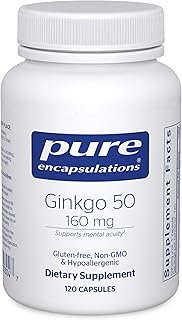
Many women in midlife consider ginkgo biloba for cognitive support, circulation, or tinnitus relief. Understanding the difference between a standardized extract and raw leaf powder can help you make an informed choice.
Standardized extracts are manufactured to deliver consistent levels of flavonoid glycosides and terpene lactones, the compounds most studied for biological activity, whereas raw leaf products vary widely in composition [1].
What Standardization Means for Ginkgo Biloba
Standardization refers to a manufacturing process that adjusts the raw plant material so that each batch contains a defined amount of marker compounds. A 2009 chemical analysis of ginkgo leaves, extracts, and phytopharmaceuticals emphasized that reliable products target approximately 24 % flavone glycosides and 6 % terpene lactones [1].
These two groups of constituents are the ones most frequently measured in clinical research, so a standardized extract offers a predictable dose of the actives that have been evaluated in studies.
Raw leaf powder, by contrast, reflects the natural variability of the plant and does not guarantee any specific level of these markers.
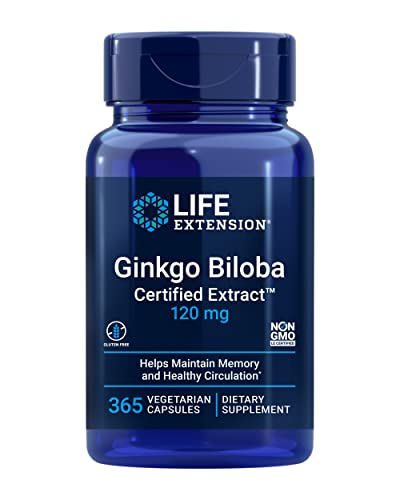

Raw Leaf Powder: Variability and Potential Contaminants
Because raw leaf is simply dried and ground ginkgo, its flavonoid and terpene content can shift with harvest time, geographic origin, and drying method. The same 2009 analysis noted that non‑standardized material shows wide batch‑to‑batch differences in both desired compounds and unwanted substances [1].
One particular concern is ginkgolic acids, which are alkylphenols that can cause allergic reactions and are limited to low levels in regulated extracts. Standardized products typically meet specifications that keep ginkgolic acids below 5 ppm, a level not assured in raw leaf powders.
Quality Control, Labeling, and Third‑Party Testing
The 2009 review highlighted that quality‑control procedures — such as high‑performance liquid chromatography (HPLC) fingerprinting — are essential for verifying that a product matches its label claims [1].
Look for supplements that display a Certificate of Analysis from an independent laboratory (e.g., USP, NSF, ConsumerLab). These programs test for marker compound potency, heavy metals, pesticides, and microbial limits, providing an extra layer of assurance beyond the manufacturer’s own specifications.
Safety Considerations: Drug Interactions and Bleeding Risk
An exploratory study of primary‑care patients identified a notable number of potential drug‑dietary supplement interactions involving ginkgo, especially with anticoagulant and antiplatelet medications [2].
A 2022 review on dietary supplements and bleeding reported that ginkgo may increase bleeding tendency when taken together with warfarin, aspirin, or other blood‑thinning agents [3].
If you are on any prescription medication — particularly anticoagulants, antiplatelets, or NSAIDs — discuss ginkgo use with your healthcare provider before starting a supplement.
Evidence for Common Uses: Cognition, Tinnitus, and Vascular Health
Current opinion on tinnitus management notes that ginkgo biloba has been studied for this condition, but the overall evidence remains limited and inconsistent [4].
A literature review of pharmacological agents for venous leg ulcer healing included ginkgo among the agents examined, yet concluded that data supporting its benefit are sparse [5].
A review of nutrient supplementation approaches for ADHD mentioned ginkgo as one of several agents investigated; however, the authors described the findings as inconclusive and called for more rigorous trials [6].
Practical Tips for Selecting a Product
Choose a product labeled as a standardized extract (e.g., EGb 761 or equivalent) that states the percentage of flavone glycosides and terpene lactones on the label, and verify that a third‑party test confirms those numbers.
Start with the lowest recommended dose, monitor for any gastrointestinal upset, headache, or unusual bruising, and keep your clinician informed — especially if you have a bleeding disorder or are scheduled for surgery.
References
- Chemical analysis and quality control of Ginkgo biloba leaves, extracts, and phytopharmaceuticals. Journal of chromatography. A, 2009
- Incidence and severity of potential drug-dietary supplement interactions in primary care patients: an exploratory study of 2 outpatient practices. Archives of internal medicine, 2004
- Dietary supplements and bleeding. Proceedings (Baylor University. Medical Center), 2022
- Current opinion: the management of tinnitus. Current opinion in otolaryngology & head and neck surgery, 2015
- A Literature Review of Pharmacological Agents to Improve Venous Leg Ulcer Healing. Wounds : a compendium of clinical research and practice, 2020
- Nutrient supplementation approaches in the treatment of ADHD. Expert review of neurotherapeutics, 2009
These statements have not been evaluated by the Food and Drug Administration. This information is not intended to diagnose, treat, cure, or prevent any disease. Content is for informational purposes only and is not medical advice; consult a qualified healthcare provider before starting any supplement. As an Amazon Associate we earn from qualifying purchases.