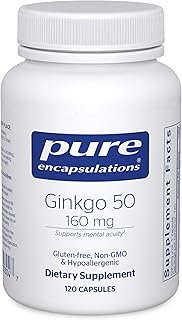
Ginkgo biloba has one of the largest human trial databases of any botanical supplement, with research spanning circulation, cognitive function in dementia populations, tinnitus, and healthy-adult cognitive performance. The results are not uniform, and reading the actual trial landscape honestly means separating where the evidence is strong from where it is mixed or negative.
This post contains affiliate links. If you buy through them, we may earn a small commission at no extra cost to you. This does not influence what we recommend.
Where the Evidence Is Strongest: Peripheral Circulation
Peripheral arterial disease and intermittent claudication (pain from reduced leg blood flow during walking) are often described as ginkgo’s strongest domain. The trial record does not support that. The Cochrane review of ginkgo for intermittent claudication pooled 14 randomised trials in 739 participants and found the improvement in absolute claudication distance was not statistically significant (P = 0.06) — about 64 metres on a flat treadmill, with a confidence interval crossing zero — and judged that publication bias had likely inflated even that estimate. Its conclusion was that there is no evidence of a clinically significant benefit in peripheral arterial disease[1]. The most favourable controlled evidence for ginkgo is elsewhere: a meta-analysis of seven trials of EGb 761 in people who already had dementia found significant improvements in cognition, activities of daily living and global rating over 22-26 weeks[2] — while the large trials of ginkgo for preventing dementia were negative[3].
Dementia and Age-Related Cognitive Decline
This is where the evidence gets genuinely mixed. Some trials, particularly using the EGb 761 extract at 240mg/day, found modest benefits in cognitive and functional symptoms in mild-to-moderate dementia over 22 to 24 weeks. Other large trials, including the long-running Ginkgo Evaluation of Memory (GEM) study in over 3,000 older adults, found no reduction in the incidence of Alzheimer’s disease or dementia compared to placebo. Regulatory bodies in different countries have reached different conclusions about whether the evidence meets the bar for an approved medical claim.
Healthy Adult Cognitive Performance
For cognitively healthy adults without existing decline, the trial evidence for meaningful memory or attention improvement is weaker and less consistent than marketing claims often suggest. Some smaller trials show modest short-term gains on specific cognitive tests; larger, better-controlled trials often show no significant difference from placebo. Anyone taking ginkgo specifically to boost cognition in the absence of any decline should calibrate expectations accordingly.
Tinnitus
Ginkgo is frequently marketed for tinnitus, but the trial evidence here is among the weakest in the ginkgo research base. Systematic reviews have generally found no convincing benefit over placebo for tinnitus specifically, despite it being one of the most common consumer reasons for trying the supplement.

Frequently Asked Questions
What extract and dose do most positive trials use?
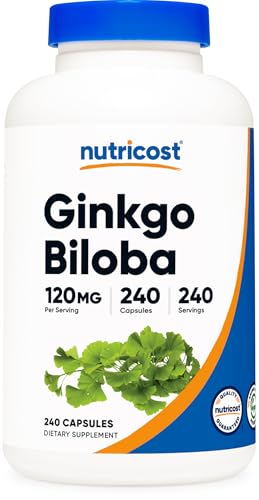
Most of the higher-quality positive trials, especially in circulation and dementia research, use standardized EGb 761 extract at 120 to 240mg per day, split into two doses. Products that do not specify standardization are harder to compare to the trial evidence.
How long do trials typically run before measuring an effect?
Most meaningful trials run 12 to 24 weeks. Effects, when present, are not immediate; trials measuring outcomes at 4 to 8 weeks generally show weaker or no signal.

Should I expect a noticeable cognitive effect if I’m healthy?
Based on the trial base, a healthy adult without existing decline should expect a modest, uncertain effect at best, not a dramatic one. The strongest, most reproducible evidence is in circulation, not cognition.
Bottom Line
Ginkgo’s trial record is real but uneven. Circulation-related benefits have the most consistent support; cognitive benefits, especially in healthy adults, are supported by a smaller and more contradictory body of evidence. Treat marketing claims that flatten this nuance with appropriate skepticism.
Important safety note: Ginkgo biloba is often described as a blood thinner. Standardised extract does inhibit platelet aggregation and prolong bleeding time as a pharmacological property[4], but that is a proposed mechanism rather than a confirmed clinical effect: a meta-analysis of 18 randomised trials in 1,985 adults found no significant effect on platelet aggregation, fibrinogen concentration, aPTT or prothrombin time, and did not indicate a higher bleeding risk[5]. A review of controlled studies likewise found that ginkgo did not impair haemostasis or compromise the safety of coadministered aspirin or warfarin, while noting that an idiosyncratic bleeding event cannot be excluded and that isolated case reports do exist[6], including chronic ginkgo use preceding spontaneous subdural haematoma[7]. Those trials were not designed to establish safety in people who are already anticoagulated, so that specific question is open rather than answered. If you take warfarin, aspirin, clopidogrel, or any other blood thinner, or if you have a bleeding disorder or an upcoming surgery, talk to your doctor before starting ginkgo. This applies even to otherwise low-risk uses like memory support.
These statements have not been evaluated by the FDA. This product is not intended to diagnose, treat, cure, or prevent any disease.
References
- Ginkgo biloba for intermittent claudication. Cochrane Database of Systematic Reviews, 2013
- Efficacy and tolerability of Ginkgo biloba extract EGb 761 in dementia: a systematic review and meta-analysis of randomized placebo-controlled trials. Clinical Interventions in Aging, 2014
- Ginkgo biloba for prevention of dementia: a randomized controlled trial. JAMA, 2008
- EGb 761: ginkgo biloba extract, Ginkor. Drugs in R&D, 2003
- Is there a risk of bleeding associated with standardized Ginkgo biloba extract therapy? A systematic review and meta-analysis. Pharmacotherapy, 2011
- Potential interaction of Ginkgo biloba leaf with antiplatelet or anticoagulant drugs: what is the evidence? Molecular Nutrition & Food Research, 2008
- Spontaneous bilateral subdural hematomas associated with chronic Ginkgo biloba ingestion. Neurology, 1996
These statements have not been evaluated by the Food and Drug Administration. This information is not intended to diagnose, treat, cure, or prevent any disease. Content is for informational purposes only and is not medical advice; consult a qualified healthcare provider before starting any supplement. As an Amazon Associate we earn from qualifying purchases.