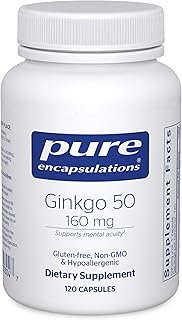
For women navigating midlife and menopause, understanding how to use supplements like ginkgo biloba responsibly is a common concern. When considering any botanical extract, knowing typical dosages and potential safety limits is important.
This article provides an overview of ginkgo biloba dosages that have been explored in research, focusing on information relevant to adult women. We’ll discuss general guidelines and highlight the importance of individual considerations.
What is Ginkgo Biloba Extract?
Ginkgo biloba extract, often referred to as EGb 761®, is derived from the leaves of the ginkgo tree. It’s one of the most widely used herbal supplements globally and has been the subject of various studies [1]. The standardized extract contains specific active compounds, primarily flavonoids and terpenoids, which are believed to contribute to its observed effects.

Common Dosages for Ginkgo Biloba in Adults
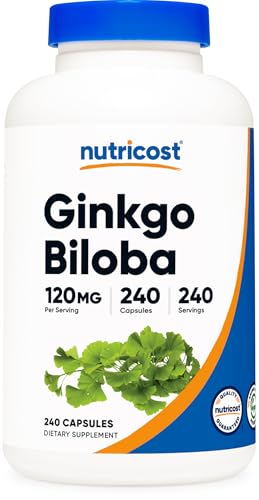
In many studies involving adults, daily dosages of standardized ginkgo biloba extract often fall within a range. For example, some research has explored dosages such as 120 mg to 240 mg per day, typically divided into two or three doses [1]. These amounts are frequently used in studies investigating cognitive function or other areas of interest.
It’s worth noting that specific dosages can vary depending on the particular focus of a study. For instance, some research involving ginkgo biloba has utilized a 120 mg daily dose [2][3][4]. Other studies have explored dosages up to 240 mg per day [1]. These examples illustrate the range of dosages that have been examined in a research context.
Exploring Higher Dosages: What the Evidence Suggests
While common daily dosages often range from 120 mg to 240 mg, some research has investigated higher amounts. For example, a study involving patients with advanced hepatocellular carcinoma explored ginkgo biloba extract in combination with sorafenib, where patients received 240 mg of ginkgo biloba extract daily, and it was found to be clinically safe and tolerable in that specific context [5]. This suggests that, under certain supervised conditions, dosages at the higher end of the common range or slightly above have been explored.
It’s important to differentiate between typical usage and dosages explored in specific clinical research settings. While a 240 mg daily dose has been assessed for safety and tolerability in certain patient populations [5], this does not automatically translate to a recommended daily maximum for general use without professional guidance. The safety of higher doses can be influenced by individual health status and potential interactions.
Safety and Tolerability Considerations for Women in Midlife
Ginkgo biloba has a long history of use as a herbal remedy and supplement, although a review of its toxicity notes clear evidence of carcinogenic activity of one leaf extract in mice and a classification of ginkgo leaf extract as a possible human carcinogen by the International Agency for Research on Cancer [6]. However, like any supplement, it’s not without potential considerations, especially for women in midlife who may be taking other medications or have underlying health conditions. A comprehensive review of ginkgo biloba-induced toxicity, from experimental studies to human case reports, indicates that adverse events can occur and that one leaf extract showed carcinogenic activity in mice [6].
Of particular importance is the potential for ginkgo biloba to interact with certain medications. It has been noted for its potential to interact with drugs metabolized by cytochrome P450 enzymes [7]. For example, a study found that ginkgo biloba did not significantly affect the pharmacokinetics of raltegravir in healthy volunteers, indicating a lack of a clinically relevant drug interaction in that specific case [8]. However, the general potential for interactions, especially with blood-thinning medications or those affecting the central nervous system, warrants careful consideration [7]. Women in midlife should always discuss their supplement use with a healthcare provider, particularly if they are taking prescription medications.
While ginkgo biloba extract is generally considered safe for consumption, pregnant women are typically advised against its use [9]. This highlights the importance of considering individual life stages and health circumstances when evaluating supplement use.
Guidelines for Determining an Appropriate Dosage
There is no universally agreed-upon ‘maximum safe dosage’ that applies to all individuals, as safety can be influenced by many factors, including age, health status, and other medications. However, based on available research, daily dosages ranging from 120 mg to 240 mg of standardized ginkgo biloba extract are commonly explored and generally considered in studies for adults [1].
For women in midlife and menopause, it is advisable to start with a lower dose and observe how your body responds. Always adhere to the dosage instructions provided on the product label, unless otherwise advised by a healthcare professional. The quality and standardization of ginkgo biloba products can vary, so choosing a reputable brand that provides a standardized extract (e.g., EGb 761®) is also a sensible practice.
References
- Ginkgo biloba extract EGb 761® in children with ADHD. Zeitschrift fur Kinder- und Jugendpsychiatrie und Psychotherapie, 2014
- Tinnitus. BMJ clinical evidence, 2012
- Tinnitus. BMJ clinical evidence, 2014
- Tinnitus. BMJ clinical evidence, 2007
- Ginkgo biloba extract in combination with sorafenib is clinically safe and tolerable in advanced hepatocellular carcinoma patients. Phytomedicine : international journal of phytotherapy and phytopharmacology, 2016
- Review of Ginkgo biloba-induced toxicity, from experimental studies to human case reports. Journal of environmental science and health. Part C, Environmental carcinogenesis & ecotoxicology reviews, 2017
- Pharmacokinetic and pharmacodynamic herb-drug interactions-part I. Herbal medicines of the central nervous system. PeerJ, 2023
- Effect of ginkgo biloba on the pharmacokinetics of raltegravir in healthy volunteers. Antimicrobial agents and chemotherapy, 2012
- Is it safe to consume traditional medicinal plants during pregnancy?. Phytotherapy research : PTR, 2021
These statements have not been evaluated by the Food and Drug Administration. This information is not intended to diagnose, treat, cure, or prevent any disease. Content is for informational purposes only and is not medical advice; consult a qualified healthcare provider before starting any supplement. As an Amazon Associate we earn from qualifying purchases.