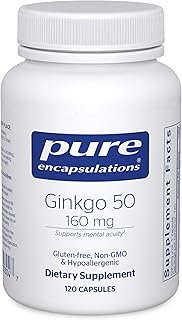
For women in midlife and menopause considering botanical options, understanding the long-term safety of supplements like Ginkgo biloba is a common and important concern. While Ginkgo biloba has been studied for various potential benefits, extended use requires careful consideration of its safety profile.
This article aims to provide an evidence-based overview of the ginkgo long term safety, drawing on available research to help women make informed decisions. We’ll discuss what current evidence suggests about its use over time, potential interactions, and general safety considerations.
General Safety Profile of Ginkgo Biloba
Ginkgo biloba extract, particularly standardized forms like EGb 761, is generally considered to have a favorable safety profile when used appropriately [1]. Most reported side effects are mild and uncommon, including gastrointestinal discomfort, headache, and dizziness [1].
It’s important to note that the safety profile can vary depending on the specific extract and individual health conditions. Regular monitoring by a healthcare provider is always recommended, especially for long-term use or if you have pre-existing health concerns.
Potential for Interactions with Medications
One of the most significant considerations for ginkgo long term safety, especially for women in midlife who may be taking multiple medications, is its potential for drug interactions. Ginkgo biloba may interact with anticoagulant and antiplatelet medications, potentially increasing the risk of bleeding [1]. This is a crucial point for anyone on blood thinners, including aspirin, warfarin, or clopidogrel.
Ginkgo is also commonly listed as interacting with antidepressants, but the documented events in that combination have been bleeding-related rather than serotonergic — ginkgo is not a serotonergic agent. In a review of 147 herb–psychotropic interaction cases, the most common complication among people taking SSRIs or SNRIs was haemorrhagic and was associated with ginkgo, while the serotonin syndrome cases in that series occurred with ginseng [2]. The most serious event reported with an antidepressant specifically is a case of coma when ginkgo was combined with trazodone [3]. Individuals taking any prescription medications should consult their healthcare provider before starting Ginkgo biloba to assess potential interactions.
Considerations for Specific Health Conditions
While Ginkgo biloba has been explored in various health contexts, its long-term safety and appropriateness depend on individual health status. For instance, studies have explored its use in conditions like unstable angina pectoris, with some reviews suggesting a favorable safety profile in that context [4]. Similarly, research has investigated its use in diabetic kidney disease, with systematic reviews also considering its safety in combination with ACEI/ARB medications [5].
However, these studies often involve specific populations and controlled environments. The general applicability of long-term use for other conditions, or in individuals with complex health profiles, still requires careful evaluation with a healthcare professional. For conditions like tinnitus, the evidence regarding Ginkgo biloba’s effectiveness has been mixed, with some reviews indicating no clear benefit for chronic tinnitus [6][7][8].

Ginkgo Biloba and Bleeding Risk
The concern regarding Ginkgo biloba and increased bleeding risk is a frequently discussed aspect of its long-term safety. While some early reports and theoretical mechanisms suggested this, large-scale studies have not consistently demonstrated a significant increase in bleeding events in healthy individuals [1]. However, the potential for interaction with anticoagulant and antiplatelet medications remains a critical consideration [1].
Women planning surgery or dental procedures should discontinue Ginkgo biloba several weeks beforehand to minimize any theoretical risk of bleeding complications. Always inform your surgeon or dentist about all supplements you are taking.
Quality and Standardization of Ginkgo Biloba Products
The ginkgo long term safety can also be influenced by the quality and standardization of the product itself. Reputable Ginkgo biloba extracts, such as EGb 761, are standardized to contain specific levels of active compounds (flavone glycosides and terpene lactones) [1][9]. Non-standardized products or those from less reputable sources may have variable compositions, potentially containing impurities or insufficient levels of active ingredients, which could affect both efficacy and safety.
When considering long-term use, choosing a high-quality, standardized extract from a trusted manufacturer is advisable. This helps ensure consistency in dosage and a better understanding of the expected safety profile.
References
- Ginkgo biloba: indications, mechanisms, and safety. The Psychiatric clinics of North America, 2013
- Unwanted effects of psychotropic drug interactions with medicinal products and diet supplements containing plant extracts. Psychiatria polska, 2018
- Interactions between herbal medicines and prescribed drugs: a systematic review. Drugs, 2001
- Efficacy and safety of Ginkgo biloba extract in the treatment of unstable angina pectoris: A systematic review and network meta-analysis. Journal of ethnopharmacology, 2024
- The efficacy and safety of Ginkgo biloba L. leaves extract combined with ACEI/ARB on diabetic kidney disease: a systematic review and meta-analysis of 41 randomized controlled trials. Frontiers in pharmacology, 2024
- Tinnitus. BMJ clinical evidence, 2014
- Tinnitus. BMJ clinical evidence, 2012
- Tinnitus. BMJ clinical evidence, 2009
- Multifaceted therapeutic benefits of Ginkgo biloba L.: chemistry, efficacy, safety, and uses. Journal of food science, 2008
These statements have not been evaluated by the Food and Drug Administration. This information is not intended to diagnose, treat, cure, or prevent any disease. Content is for informational purposes only and is not medical advice; consult a qualified healthcare provider before starting any supplement. As an Amazon Associate we earn from qualifying purchases.