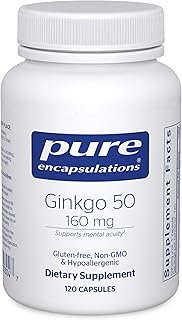
For women navigating midlife and menopause, understanding the various forms of ginkgo biloba supplements can be helpful when considering their options. Ginkgo biloba is commonly available in capsules, tablets, and liquid extracts, each with distinct characteristics.
This article aims to provide an evidence-based overview of these different ginkgo formulations, focusing on factors like consistency, absorption, and potential considerations, without offering medical advice or making claims about health outcomes.
Ginkgo Biloba Capsules: A Common Choice
Ginkgo biloba capsules are a widely available formulation, often containing powdered extract or a standardized liquid extract within a gelatin or vegetable casing. One of the primary advantages of capsules is their convenience and ease of dosage. Each capsule typically contains a pre-measured amount of ginkgo extract, which can help ensure consistent intake.
The absorption of compounds from ginkgo biloba can be influenced by various factors, including the specific formulation. Research has explored the pharmacokinetic profile of different parts of Ginkgo biloba extract [1]. Capsules, like other oral forms, deliver the active components to the digestive system, where they are then processed.
When considering ginkgo formulations capsules, it’s worth noting that the quality and consistency of the extract within can vary between products. The bioavailability of active components from Ginkgo biloba preparations can be influenced by pharmaceutical quality [2].


Ginkgo Biloba Tablets: Compressed Extracts
Tablets represent another common ginkgo biloba formulation. These are typically made by compressing powdered ginkgo extract, often with binders and fillers, into a solid form. Similar to capsules, tablets offer the benefit of precise, pre-dosed amounts, which can contribute to consistent use.
The manufacturing process for tablets can impact how the active compounds are released and absorbed in the body. The pharmacokinetic profile of different ginkgo formulations has been a subject of study [3]. While tablets are designed for oral ingestion and subsequent absorption, the specific excipients used in their formulation might influence dissolution rates.
Ensuring the pharmaceutical quality of ginkgo biloba preparations is important for the bioavailability of their active components [2]. When evaluating ginkgo tablets, it may be beneficial to consider products from reputable manufacturers that prioritize quality control.
Liquid Extracts: Potency and Absorption Considerations
Liquid ginkgo biloba extracts offer an alternative to capsules and tablets. These formulations typically involve extracting compounds from ginkgo leaves using solvents like alcohol or glycerin. One potential benefit of liquid extracts is that they may be absorbed more rapidly than solid forms, as they don’t require the dissolution of a capsule or tablet shell.
The metabolome of ginkgo biloba extract and its detection at trace levels have been investigated, suggesting the complexity of its compounds [4]. Liquid extracts can also allow for more flexible dosing, as the amount consumed can be adjusted drop by drop. However, this flexibility also means that precise dosing may require careful measurement.

The consistency of liquid extracts can vary significantly between brands, depending on the extraction method and concentration. The overall pharmacokinetic profile of ginkgo compounds can be influenced by how the extract is prepared [1]. Some studies have also explored how specific ginkgo components, like flavonoid glycosides, are metabolized [5].
Factors Influencing Absorption and Bioavailability
Regardless of whether you choose ginkgo formulations capsules, tablets, or liquid extracts, several factors can influence how the active components are absorbed and utilized by the body. The overall pharmaceutical quality of the preparation plays a significant role in the bioavailability of its active components [2]. This includes the quality of the raw materials and the manufacturing process.
Research has examined the pharmacokinetics of various ginkgo extract components. For instance, studies have looked into the brain distribution of certain compounds, which underscores the importance of absorption and transport mechanisms [6]. The complex interaction of metabolites from ginkgo biloba extract also highlights the intricate processes involved after ingestion [4].
Some research has also explored specific formulations designed to enhance absorption, such as ginkgo biloba extract complexed with phosphatidylserine, which has shown acute cognitive effects [7]. Other studies have investigated proliposome formulations for their comparative pharmacokinetics [3]. These types of studies suggest that the delivery system can play a role in how effectively the body processes ginkgo compounds.
Standardization and Consistency
When evaluating ginkgo biloba products, standardization is a key consideration. Many ginkgo products are standardized to contain a certain percentage of active compounds, such as flavonoid glycosides and terpene lactones. This standardization aims to ensure a consistent level of these components in each dose, regardless of the formulation.
While standardization offers a measure of consistency, the overall quality of the extract can still vary. The bioavailability of active components from Ginkgo biloba preparations is influenced by pharmaceutical quality [2]. This means that even if two products are standardized to the same percentage, differences in the extraction process or raw material quality could lead to variations.
For women considering ginkgo during midlife and menopause, selecting a product from a reputable manufacturer that adheres to good manufacturing practices (GMP) and provides clear information about its standardization and quality testing can be a sensible approach. Understanding the pharmacokinetic profile of different parts of Ginkgo biloba extract can also inform choices [1].
References
- Interactions of pharmacokinetic profile of different parts from Ginkgo biloba extract in rats. Journal of ethnopharmacology, 2014
- Influence of pharmaceutical quality on the bioavailability of active components from Ginkgo biloba preparations. The Journal of pharmacy and pharmacology, 2002
- Comparative pharmacokinetics of a proliposome formulation of Ginkgo biloba extract and Ginaton in rats by a sensitive ultra performance liquid chromatography-tandem mass spectrometry method. Saudi journal of biological sciences, 2016
- Intestinal mucosal metabolites-guided detection of trace-level ginkgo biloba extract metabolome. Journal of chromatography. A, 2019
- Metabolism of quercetin and kaempferol by rat hepatocytes and the identification of flavonoid glycosides in human plasma. Xenobiotica; the fate of foreign compounds in biological systems, 2002
- Pharmacokinetics and brain distribution studies of 6-hydroxykynurenic acid and its structural modified compounds. The Journal of pharmacy and pharmacology, 2022
- Acute cognitive effects of standardised Ginkgo biloba extract complexed with phosphatidylserine. Human psychopharmacology, 2007
These statements have not been evaluated by the Food and Drug Administration. This information is not intended to diagnose, treat, cure, or prevent any disease. Content is for informational purposes only and is not medical advice; consult a qualified healthcare provider before starting any supplement. As an Amazon Associate we earn from qualifying purchases.