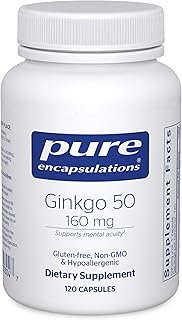
Navigating perimenopause often brings a range of new or changing symptoms, and for some women, headaches and migraines can become more frequent or intense. As interest grows in natural approaches, questions about the potential role of supplements like ginkgo biloba often arise.
This article examines the current scientific understanding regarding ginkgo biloba and its potential connection to headaches and migraines, particularly in the context of perimenopause. We will review the available evidence, highlight its limitations, and discuss what this means for those considering ginkgo biloba.
Understanding Headaches and Migraines in Perimenopause
Perimenopause is a transitional phase leading up to menopause, marked by fluctuating hormone levels, particularly estrogen. These hormonal shifts can influence various bodily systems, and for some individuals, they may contribute to changes in headache patterns. While headaches are common, migraines involve more severe pain, often with additional symptoms like sensitivity to light or sound, and can significantly impact daily life.
Exploring potential supportive strategies is a common consideration during this time. While some individuals look to dietary changes, stress management, or conventional medications, others may investigate herbal supplements like ginkgo biloba.
Ginkgo Biloba: A Look at the Current Research
Ginkgo biloba is an ancient tree species, and extracts from its leaves have been studied for various potential health benefits. Much of the research on ginkgo biloba has focused on its effects on cognitive function in conditions like mild cognitive impairment and dementia [1]. However, its potential connection to headaches and migraines is a more recent and less extensively explored area.
It’s important to note that direct, high-quality research specifically on ginkgo biloba for headaches or migraines in perimenopausal women is very limited. Most of the available evidence comes from studies on other conditions where headaches might be a symptom, or from very early-stage research.


Ginkgo and Migraine: Early Insights and Mountain Sickness
While direct evidence for ginkgo biloba and perimenopausal migraines is scarce, some preliminary research is emerging. A very recent study used network pharmacology and molecular docking to explore ginkgo seed as a potential medicine-food homology for migraine, suggesting theoretical insights into its mechanisms [2]. This type of research is foundational and helps identify potential pathways, but it does not involve human trials or clinical outcomes.
Interestingly, ginkgo biloba has been studied more extensively for its potential role in preventing acute mountain sickness (AMS), a condition that can include headache as a prominent symptom. Several systematic reviews and meta-analyses have looked at ginkgo biloba extract for AMS prevention. For example, a 2018 systematic review and meta-analysis of randomized controlled trials investigated ginkgo biloba extract for the prevention of AMS [3]. Other studies, such as one from 2002, explored ginkgo biloba for preventing severe AMS when started one day before rapid ascent [4]. A 2004 randomized, double-blind, placebo-controlled comparison also looked at ginkgo biloba against acetazolamide for AMS prevention among Himalayan trekkers [5]. While these studies relate to headaches as a symptom of AMS, they are not directly applicable to perimenopausal headaches or migraines, which have different underlying causes.

What We Don’t Know Yet: Gaps in the Evidence
The current body of evidence does not offer clear answers regarding ginkgo biloba’s effectiveness for headaches or migraines specifically experienced during perimenopause. Studies that directly address this population and symptom are largely absent.
We lack robust clinical trials specifically designed to evaluate ginkgo biloba’s impact on headache frequency, intensity, or duration in women navigating perimenopause. Therefore, any conclusions about its benefits for this specific concern would be premature and unsupported by current research.
References
- An Overview of Systematic Reviews of Ginkgo biloba Extracts for Mild Cognitive Impairment and Dementia. Frontiers in aging neuroscience, 2016
- Ginkgo Seed as Medicine-Food Homology for Migraine: Network Pharmacology and Molecular Docking Insights. International journal of molecular sciences, 2025
- Ginkgo biloba extract for prevention of acute mountain sickness: a systematic review and meta-analysis of randomised controlled trials. BMJ open, 2018
- Ginkgo biloba for the prevention of severe acute mountain sickness (AMS) starting one day before rapid ascent. High altitude medicine & biology, 2002
- Randomised, double blind, placebo controlled comparison of ginkgo biloba and acetazolamide for prevention of acute mountain sickness among Himalayan trekkers: the prevention of high altitude illness trial (PHAIT). BMJ (Clinical research ed.), 2004
These statements have not been evaluated by the Food and Drug Administration. This information is not intended to diagnose, treat, cure, or prevent any disease. Content is for informational purposes only and is not medical advice; consult a qualified healthcare provider before starting any supplement. As an Amazon Associate we earn from qualifying purchases.