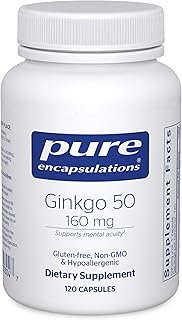
As women navigate midlife and menopause, questions about maintaining cognitive health, including the potential role of supplements like ginkgo biloba, often arise. Dementia, particularly Alzheimer’s disease, is a significant concern, with women experiencing it more frequently than men [1].
This article examines the current scientific understanding of ginkgo biloba’s potential for dementia prevention, highlighting what the evidence suggests for women and where limitations exist. It’s important to approach such topics with a balanced perspective, considering both promising findings and the need for more conclusive research.
Understanding Ginkgo Biloba and Cognitive Health
Ginkgo biloba extract, often derived from the leaves of the ginkgo tree, has been investigated for its potential neuroprotective and antioxidant effects [2]. These properties are thought to be beneficial for brain health, which is crucial for maintaining cognitive function as we age.
Research suggests that ginkgo biloba may help improve cerebrovascular function and address cognitive impairment in animal models of Alzheimer’s disease [3]. It has also been observed to support an innate immune response in peripheral blood leukocytes of individuals with Alzheimer’s disease [4].


Ginkgo Biloba and Dementia Prevention: What the Research Shows
Several studies have explored ginkgo biloba’s role in dementia prevention. A systematic review and meta-analysis of two randomized trials found no significant difference in dementia rate between ginkgo biloba and placebo [5]. More detail on individual trials follows.
A large randomized controlled trial, the Ginkgo Evaluation of Memory (GEM) study, investigated whether ginkgo biloba could reduce the incidence of dementia in older adults. This study found that ginkgo biloba did not reduce the incidence of all-cause dementia or Alzheimer’s disease in the long term [6]. Another study in a population of women aged 75 years and older found that fewer women who developed Alzheimer’s dementia had been prescribed this type of treatment, including ginkgo extract, for at least 2 years, although the result for ginkgo extract alone did not reach statistical significance [7].
Likewise, some research indicates that ginkgo biloba extract consumption might be associated with a lower long-term occurrence of death and dementia [8]. This highlights the mixed nature of the current evidence regarding direct dementia prevention.
Neuroprotective Mechanisms and Midlife Women
The potential neuroprotective effects of ginkgo biloba, such as its antioxidant properties, could be relevant for women in midlife [2]. Oxidative stress and inflammation are implicated in the development of neurodegenerative conditions, and compounds that can mitigate these factors are of interest [9].
Given that women experience Alzheimer’s disease more often than men, potentially due to factors like mitochondrial toxicity [1], exploring agents with neuroprotective potential is particularly pertinent. While ginkgo biloba’s specific impact on these gender-specific factors in humans is still being investigated, its general neuroprotective characteristics offer a theoretical basis for continued research.

Limitations and Considerations for Midlife Women
Despite some promising findings in certain areas, the evidence specifically supporting ginkgo biloba for dementia prevention in women, particularly during midlife, remains moderate and mixed. Large-scale studies like the GEM trial did not demonstrate a direct preventative effect on dementia incidence [6].
It’s important to recognize that while ginkgo biloba is considered a nutraceutical, and guidelines exist for its use in psychiatric disorders [10], its role as a standalone agent for dementia prevention has not been definitively established. The focus should remain on a holistic approach to brain health, including lifestyle factors.
References
- Why women have more Alzheimer’s disease than men: gender and mitochondrial toxicity of amyloid-beta peptide. Journal of Alzheimer’s disease : JAD, 2010
- Neuroprotective and Antioxidant Effect of Ginkgo biloba Extract Against AD and Other Neurological Disorders. Neurotherapeutics : the journal of the American Society for Experimental NeuroTherapeutics, 2019
- Ginkgo biloba Extract GBE50 ameliorates cerebrovascular dysfunction and cognitive impairment in a mouse model of Alzheimer’s disease. Phytomedicine : international journal of phytotherapy and phytopharmacology, 2025
- Ginkgo Biloba Leaf Extract Improves an Innate Immune Response of Peripheral Blood Leukocytes of Alzheimer’s Disease Patients. Nutrients, 2022
- Ginkgo biloba for prevention of dementia: a systematic review and meta-analysis. Journal of the Medical Association of Thailand = Chotmaihet thangphaet, 2015
- Ginkgo biloba for prevention of dementia: a randomized controlled trial. JAMA, 2008
- Association of Alzheimer’s disease onset with ginkgo biloba and other symptomatic cognitive treatments in a population of women aged 75 years and older from the EPIDOS study. The journals of gerontology. Series A, Biological sciences and medical sciences, 2003
- Ginkgo Biloba Extract Consumption and Long-Term Occurrence of Death and Dementia. The journal of prevention of Alzheimer’s disease, 2017
- Neuroprotective Herbs for the Management of Alzheimer’s Disease. Biomolecules, 2021
- Clinician guidelines for the treatment of psychiatric disorders with nutraceuticals and phytoceuticals: The World Federation of Societies of Biological Psychiatry (WFSBP) and Canadian Network for Mood and Anxiety Treatments (CANMAT) Taskforce. The world journal of biological psychiatry : the official journal of the World Federation of Societies of Biological Psychiatry, 2022
These statements have not been evaluated by the Food and Drug Administration. This information is not intended to diagnose, treat, cure, or prevent any disease. Content is for informational purposes only and is not medical advice; consult a qualified healthcare provider before starting any supplement. As an Amazon Associate we earn from qualifying purchases.