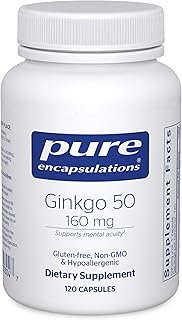
Navigating midlife and menopause often brings questions about supporting well-being, and some women explore herbal supplements like Ginkgo biloba. When considering any supplement, understanding potential dosage adjustments is a common and sensible concern.
This article examines what current research suggests about adjusting ginkgo dosage based on factors such as age and body weight, particularly for women in their midlife years. It’s important to note that specific, evidence-based guidelines for these adjustments are limited, and individual responses can vary.
Understanding Ginkgo Biloba Extracts and Standard Dosages
Ginkgo biloba supplements are typically standardized extracts, such as EGb 761, which contain specific concentrations of active compounds like flavone glycosides and terpene lactones. These standardized extracts are often what are used in research studies [1].
Common dosages used in some research contexts have ranged, for example, from 60 mg twice daily for a week in postmenopausal women studying effects on cognition and mood [2], to 120 mg daily in studies exploring effects on antidepressant-induced sexual dysfunction [3]. Another study in postmenopausal women used a combination of Ginkgo biloba and Panax ginseng, with the Ginkgo component likely falling within similar ranges [4]. However, these studies do not specifically detail dosage adjustments based on age or body weight.
It’s important to remember that ‘standard’ dosages in research are often chosen for study design purposes and may not represent universal recommendations for all individuals. The evidence regarding specific ginkgo dosage adjustments for age and body weight in women is not extensive.


Age-Related Considerations for Ginkgo Dosage in Midlife Women
As women enter midlife and menopause, physiological changes occur, including alterations in metabolism and organ function. These changes could theoretically influence how the body processes supplements. However, direct evidence specifically linking age-related physiological changes in midlife women to altered Ginkgo biloba dosage requirements is sparse.
Some research has explored Ginkgo biloba’s effects in older populations, for instance, examining alpha 2-adrenoceptor changes during cerebral aging [5]. Studies investigating cognition and mood in postmenopausal women have used specific dosages [2][4], but these studies do not provide explicit guidance on adjusting these dosages based on a woman’s exact age within the postmenopausal period.
While it’s a general principle that older adults may sometimes require lower dosages of certain compounds due to slower metabolism or increased sensitivity, this principle has not been extensively studied or confirmed for Ginkgo biloba with specific age-related dosage recommendations for midlife women. The available evidence does not provide clear instructions for adjusting ginkgo dosage solely based on a woman’s age.
Body Weight and Ginkgo Biloba: What the Evidence Suggests
Body weight can influence the distribution and elimination of substances within the body. For some medications, dosage is calculated based on body weight to achieve a consistent concentration. However, for Ginkgo biloba, there is limited research directly addressing how body weight might impact its effectiveness or safety, particularly in women.
Studies on Ginkgo biloba’s pharmacokinetics – how the body absorbs, distributes, metabolizes, and excretes it – have been conducted in healthy volunteers. For example, studies have looked at the effect of Ginkgo biloba extract on the pharmacokinetics of medications like bupropion [6] and metformin [7]. These studies typically involve participants within a certain weight range but do not provide specific ginkgo dosage adjustments proportional to body weight.
The current body of evidence does not offer specific recommendations for adjusting Ginkgo biloba dosage based on a woman’s body weight. While it’s a reasonable question to consider, there is no strong scientific consensus or research finding that dictates a weight-based dosage for Ginkgo biloba at this time.
Interactions and Safety Considerations
Regardless of age or body weight, it is crucial to be aware of potential interactions and safety considerations when taking Ginkgo biloba. Ginkgo biloba may influence blood clotting and could interact with blood-thinning medications. For instance, a study explored the effect of Ginkgo biloba on warfarin dosage in patients on long-term warfarin treatment [8]. This highlights the importance of discussing any supplement use with a healthcare provider, especially if you are taking other medications.
Other studies have examined the effect of Ginkgo biloba extract on plasma steroid concentrations [9] and its pharmacokinetics when taken with other medications like bupropion [6] or metformin [7]. These studies, while not directly about age or weight, underscore the complexity of supplement interactions within the body.
The overall safety and efficacy of Ginkgo biloba have been explored in various clinical and preclinical applications [1]. However, individual responses can vary, and potential side effects, though generally mild, can occur. Always prioritize safety by consulting with a healthcare professional before starting any new supplement.
References
- Efficacy, safety, and use of ginkgo biloba in clinical and preclinical applications. Alternative therapies in health and medicine, 2001
- Effects on cognition and mood in postmenopausal women of 1-week treatment with Ginkgo biloba. Pharmacology, biochemistry, and behavior, 2003
- Ginkgo biloba for antidepressant-induced sexual dysfunction. Journal of sex & marital therapy, 1998
- Gincosan (a combination of Ginkgo biloba and Panax ginseng): the effects on mood and cognition of 6 and 12 weeks’ treatment in post-menopausal women. Nutritional neuroscience, 2004
- Alpha 2-adrenoceptor changes during cerebral ageing. The effect of Ginkgo biloba extract. The Journal of pharmacy and pharmacology, 1992
- Effects of Ginkgo biloba extract on the pharmacokinetics of bupropion in healthy volunteers. British journal of clinical pharmacology, 2009
- The effect of the ingestion of Ginkgo biloba extract (EGb 761) on the pharmacokinetics of metformin in non-diabetic and type 2 diabetic subjects–a double blind placebo-controlled, crossover study. Clinical nutrition (Edinburgh, Scotland), 2006
- [Effect of Coenzyme Q10 and Ginkgo biloba on warfarin dosage in patients on long-term warfarin treatment. A randomized, double-blind, placebo-controlled cross-over trial]. Ugeskrift for laeger, 2003
- Effect of Ginkgo biloba extract on plasma steroid concentrations in healthy volunteers: a pilot study. Pharmacotherapy, 2005
These statements have not been evaluated by the Food and Drug Administration. This information is not intended to diagnose, treat, cure, or prevent any disease. Content is for informational purposes only and is not medical advice; consult a qualified healthcare provider before starting any supplement. As an Amazon Associate we earn from qualifying purchases.