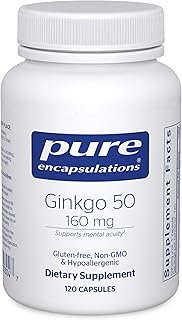
For most healthy adults, ginkgo biloba is considered reasonably safe when taken at standard doses for short-to-moderate periods. That said, it carries real risks for certain groups, interacts with common medications, and some people simply react badly to it even without any obvious risk factors.
What the research says
Ginkgo biloba is one of the most studied herbal supplements in the world, which means we have a clearer picture of its safety profile than we do for most botanicals. The overall finding from that research is nuanced: it is not dangerous for the average healthy adult at typical doses, but it is not without risk either.
Common side effects documented in clinical research and adverse event reports include headaches, dizziness, gastrointestinal upset (nausea, stomach cramps, diarrhea), and allergic skin reactions. These tend to be mild and resolve when someone stops taking the supplement, but they are frequent enough that they show up consistently across studies.
Bleeding risk is the most discussed safety concern, and it is worth being precise about what is actually established. An antiplatelet mechanism is proposed for ginkgo’s terpene lactones, and there are documented case reports of serious bleeding events, including intracranial bleeding, in people taking it. But when that effect was measured directly — a meta-analysis of 18 randomised controlled trials in 1,985 adults — ginkgo showed no significant effect on ADP-induced platelet aggregation, fibrinogen, activated partial thromboplastin time or prothrombin time, and the authors concluded the data “did not indicate a higher bleeding risk” [1]. So the honest position is not that ginkgo demonstrably thins your blood; it is that a plausible mechanism and a handful of case reports exist, controlled trials have not reproduced the effect, and nobody has shown the combination to be safe in the people who would be harmed by it. If you are already taking warfarin, aspirin or another antiplatelet drug, or you have surgery coming up, that asymmetry is the reason to clear ginkgo with your prescriber rather than decide for yourself — the upside is modest and the cost of being wrong is not.
Drug interactions are a genuine concern. Ginkgo is flagged alongside anticoagulants and antiplatelet drugs, antidepressants, anticonvulsants such as carbamazepine and valproate, diabetes medications, and certain blood pressure drugs. The antidepressant entry is the one most often described incorrectly: ginkgo is not a serotonergic agent, and in a review of 147 herb–psychotropic interaction cases the complications recorded in people taking SSRIs or SNRIs alongside ginkgo were haemorrhagic, while the serotonin syndrome cases in that same series occurred with ginseng [2]. The most serious event documented with an antidepressant specifically is a reported case of coma when ginkgo was combined with trazodone, in a systematic review that also ties ginkgo to bleeding with warfarin and raised blood pressure with a thiazide diuretic [3]. None of this is theoretical enough to skip: if you take a prescription medication, this is a conversation for your pharmacist or physician.
Pregnancy and breastfeeding are clear red lines. Ginkgo is not considered safe during pregnancy due to potential effects on bleeding and uterine contractions. Breastfeeding women should also avoid it, as safety data simply does not exist for infants.
Dosing matters too. The doses studied in clinical trials are typically in the range of 120 mg to 240 mg per day of a standardized extract (usually EGb 761), divided into two or three doses. Higher doses increase the likelihood of side effects without a clear corresponding benefit for most uses.
Product quality is an underappreciated concern. The supplement industry in many countries, including the United States, does not require pre-market approval. Independent testing organizations have found that ginkgo products vary widely in actual content, with some containing far less (or more) than the labeled dose, and some showing contamination. Choosing a product that has been independently verified by a third-party organization (NSF, USP, or similar) reduces this risk.

What real users report
Looking across Reddit communities where ginkgo biloba comes up organically, a handful of consistent themes emerge. These are not clinical findings, but they reflect genuine lived experience and are worth taking seriously alongside the research.
Theme 1: Headaches are a real and recurring complaint. This is probably the most consistent negative report across supplement-focused communities. In r/Supplements, one post with meaningful engagement describes ginkgo causing an all-day headache that persisted despite drinking extra water: the poster described it as having “literally fucked me up” after taking it to improve energy and performance. This echoes what the clinical literature notes, but the user experience adds texture. It was not a mild inconvenience for this person; it derailed the day entirely. This kind of report appears frequently enough that prospective users should start at a low dose and pay attention.
Theme 2: Some users report genuine cognitive and energy benefits. On the other side of the ledger, in r/Biohackers, one user describes “rediscovering” ginkgo biloba and reports that it seems to increase dopamine, giving a “major boost of energy and focus” that works well for social situations. This reflects a reasonably common theme across biohacking and nootropic communities: people who have found ginkgo useful for focus, mental clarity, or social energy. These positive reports are real, but they are also highly individual and not universally experienced.
Theme 3: Ginkgo appears in protocol lists, but rarely as a standalone star. Across communities like r/tinnitus and r/FinasterideSyndrome, ginkgo sometimes shows up as one item in a longer supplement stack rather than something people are specifically championing. In a detailed tinnitus support protocol post, for example, ginkgo is listed as one of many potential options alongside a heavy caveat that the protocol needs professional guidance and that not everything is appropriate for everyone. This pattern suggests that in real-world use, people are often combining ginkgo with multiple other supplements, which makes it harder to attribute effects (positive or negative) specifically to ginkgo.
Theme 4: People use it for a wide range of purposes, with mixed results. The Reddit data shows ginkgo being used or mentioned in the context of tinnitus, post-finasteride recovery, MCAS management, hair loss, and general cognitive performance. This breadth is worth noting honestly: ginkgo has some evidence behind it for specific uses (particularly cognitive function in older adults and possibly tinnitus), but it is frequently used for conditions where the evidence base is thin or absent. Users in these contexts sometimes report benefits, but the lack of a control means it is very difficult to know how much of that is the supplement versus placebo, natural recovery, or other interventions happening at the same time.
Theme 5: Negative reactions are not always predictable. The person in r/Supplements who had a severe headache did not describe any known risk factors. They simply reacted badly. This unpredictability is consistent with what clinicians observe: side effects like headaches and GI upset can happen in people who have no obvious reason to be sensitive to ginkgo. This does not make ginkgo dangerous in a broad sense, but it does mean that even low-risk individuals should introduce it carefully rather than jumping straight to a full dose.
Who should be cautious
- People taking blood thinners or antiplatelet medications (warfarin, aspirin, clopidogrel)
- People scheduled for surgery or dental procedures (typically advised to stop ginkgo at least two weeks before)
- Pregnant or breastfeeding women
- People taking SSRIs, MAOIs, or other antidepressants
- People with epilepsy or a history of seizures — ginkgo may lower the seizure threshold, and it is worth knowing where that concern comes from: the documented human seizure cases are ginkgotoxin poisoning from eating ginkgo seeds (a vitamin B6 mechanism, reversed with pyridoxine), not from leaf-extract supplements [4][5]. Raw or roasted ginkgo nuts are a genuine poisoning hazard in their own right, especially for children; a standardised leaf extract is a different product
- People with bleeding disorders
- People taking diabetes medications (ginkgo may affect blood sugar regulation)
- Children, for whom safety data is largely absent
- Anyone with a known allergy to plants in the Ginkgoaceae family or related allergens
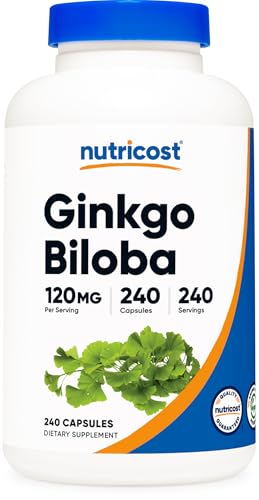

FAQ
Can ginkgo biloba cause serious harm?
For most healthy adults at standard doses, serious harm is uncommon. The main exception is the bleeding risk, which becomes clinically significant if you are on blood-thinning medications or have a bleeding disorder. There are rare case reports of serious bleeding events, which is why the interaction with anticoagulants is taken seriously by clinicians. The baseline risk for a healthy adult not on any interacting medications is low, but low is not zero.
Is it safe to take ginkgo biloba every day long-term?
Better than most supplements, this one has a real long-term answer. The Ginkgo Evaluation of Memory study randomised 3,069 community-dwelling adults aged 75 and over to 120 mg of EGb 761 twice daily or placebo and followed them for a median of 6.1 years — and reported that “the adverse effect profiles were similar for both groups” [6]. Its pre-planned cardiovascular analysis found no difference in heart attack, angina, total stroke or cardiovascular death. The one number worth knowing is that among 24 haemorrhagic strokes over those six years, 16 occurred in the ginkgo arm and 8 on placebo — a difference the investigators reported as not statistically significant, but a small imbalance in exactly the direction the bleeding concern predicts [7]. Two things follow. Multi-year daily use at a standard dose has been studied at scale and did not produce a clear safety signal, so the honest answer is not “nobody knows”. And that same trial is the reason the bleeding question is the one to raise with a clinician if you intend to stay on it, particularly if anything changes about your medications or you have surgery scheduled. Worth noting too that GEM’s primary result was null: it did not reduce dementia, so long-term use is being weighed against a benefit that trial did not find.
Can ginkgo biloba make anxiety worse?
This is reported anecdotally by some users and is plausible given that ginkgo can affect neurotransmitter activity. The stimulating or energizing effect that some people find beneficial is experienced by others as jitteriness or increased anxiety. If you have an anxiety disorder or are sensitive to stimulating supplements, approach ginkgo cautiously and at a low starting dose.
Does the brand or form of ginkgo biloba matter for safety?
Yes, meaningfully. Most of the clinical research has used a specific standardized extract (EGb 761) at defined concentrations of flavone glycosides and terpene lactones. Generic or poorly manufactured products may contain inconsistent amounts of active compounds, fillers, or contaminants. Choosing a third-party tested product from a reputable manufacturer reduces the risk of getting something that does not match its label. This matters both for effectiveness and for safety, since wildly inconsistent dosing can make side effects harder to predict.
This article is for informational purposes only and is not a substitute for professional medical advice. If you are considering ginkgo biloba and have any health conditions, take any medications, or are pregnant, speak with a qualified clinician before starting.
The user-experience section reflects themes synthesized from public discussions on Reddit communities (r/tinnitus, r/MCAS, r/TrollCoping). Individual experiences vary and are not medical advice. Consult a healthcare professional before starting or stopping any supplement.
References
- Is there a risk of bleeding associated with standardized Ginkgo biloba extract therapy? A systematic review and meta-analysis. Pharmacotherapy (2011). PMID 21923430
- Unwanted effects of psychotropic drug interactions with medicinal products and diet supplements containing plant extracts. Psychiatria polska (2018). PMID 30659561
- Interactions between herbal medicines and prescribed drugs: a systematic review. Drugs (2001). PMID 11772128
- Ginkgotoxin induced seizure caused by vitamin B6 deficiency. Journal of Epilepsy Research (2015). PMID 26819944
- A critical review of current technologies used to reduce ginkgotoxin, ginkgotoxin-5′-glucoside, ginkgolic acid, allergic glycoprotein, and cyanide in Ginkgo biloba L. seed. Food Chemistry (2022). PMID 35176549
- Ginkgo biloba for prevention of dementia: a randomized controlled trial. JAMA (2008). PMID 19017911
- Does Ginkgo biloba reduce the risk of cardiovascular events?. Circulation: Cardiovascular Quality and Outcomes (2010). PMID 20123670
These statements have not been evaluated by the Food and Drug Administration. This information is not intended to diagnose, treat, cure, or prevent any disease. Content is for informational purposes only and is not medical advice; consult a qualified healthcare provider before starting any supplement. As an Amazon Associate we earn from qualifying purchases.