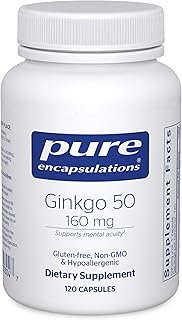
As women navigate midlife and menopause, questions about supporting cognitive function often arise. Ginkgo biloba is a popular botanical often considered for its potential effects on brain health.
When considering supplements like ginkgo, understanding how and when to incorporate them can be helpful. This article explores what current research suggests about the optimal time of day to take ginkgo biloba for cognitive benefits, particularly for women in this life stage, acknowledging the limited evidence available.
Understanding Ginkgo Biloba’s Potential Cognitive Effects
Ginkgo biloba extract is derived from the leaves of the ginkgo tree. It contains compounds that have been studied for their potential influence on various physiological processes, including those related to cognitive function [1]. Some research has explored ginkgo as a ‘nootropic,’ a substance that may support cognitive abilities [2].
The mechanisms through which ginkgo may exert its effects are complex and still being investigated. It’s thought to involve aspects like antioxidant properties and potential influences on blood flow, though more research is needed to fully understand these connections [1].
For women experiencing cognitive shifts during midlife and menopause, understanding tools that might offer support is valuable. However, it’s important to approach these discussions with a focus on evidence and realistic expectations, especially given the limited data on specific timing.


Acute vs. Chronic Dosing: What the Research Suggests
When discussing the timing of any supplement, it’s helpful to differentiate between acute (single dose) and chronic (regular, long-term) administration. Some studies have looked at the immediate effects of ginkgo, while others have examined its impact over weeks or months.
One study investigated the differential cognitive effects of ginkgo biloba after both acute and chronic treatment in healthy young volunteers. This research found varying effects depending on whether ginkgo was taken once or over a longer period [3]. Another study explored the acute cognitive effects of a standardized ginkgo biloba extract complexed with phosphatidylserine [4]. These studies suggest that the way ginkgo is taken – acutely or chronically – might influence its observed effects.
For sustained cognitive support, many botanical supplements are often considered for chronic, consistent use rather than for immediate, acute effects. This general principle might apply to ginkgo as well, but specific recommendations for midlife women are not definitively established based on current evidence.
Is There an Optimal Time of Day for Ginkgo Biloba?
The current body of scientific evidence specifically addressing the ‘optimal time of day’ to take ginkgo biloba for cognitive benefits is limited. Most studies on ginkgo’s cognitive effects do not focus on comparing morning versus evening administration or other specific daily timings.

Generally, for supplements intended for sustained support, consistency of intake is often prioritized over a precise time of day. This means taking the supplement at roughly the same time each day to maintain consistent levels in the body, which may be more important than whether it’s taken in the morning or evening.
Without specific research comparing morning vs. evening doses for cognitive outcomes, it is difficult to make an evidence-based recommendation on an optimal time of day. The focus in current literature tends to be on the effects of ginkgo over time rather than circadian timing.
Practical Considerations for Midlife Women
While specific optimal timing for ginkgo is not established, practical considerations can guide intake. Some individuals prefer to take supplements with meals to help with absorption or to minimize potential digestive upset. Others might choose a time that easily fits into their daily routine to promote consistency.
It’s also worth noting that ginkgo biloba has been mentioned in broader reviews discussing various nutrients and phytonutrients for cognitive function [5]. However, these reviews typically focus on the substances themselves and their potential effects, not on specific timing of administration.
If you are considering ginkgo biloba for cognitive support during midlife or menopause, integrating it into a consistent daily regimen that works for you is a reasonable approach, given the lack of specific timing recommendations from research.
What We Don’t Know Yet About Ginkgo Optimal Timing
The current scientific literature does not provide clear, definitive guidance on the optimal time of day to take ginkgo biloba for cognitive benefits. While some studies explore acute versus chronic effects [3][4], they do not typically differentiate between morning, afternoon, or evening dosing for cognitive outcomes.
Research often focuses on the overall impact of ginkgo extract on cognitive measures over a period of time, rather than the nuances of daily timing. Therefore, any recommendations regarding the ‘best’ time to take ginkgo are not currently supported by strong, specific evidence.
Future research may delve into chronopharmacology, exploring how the timing of supplement intake aligns with the body’s natural rhythms. Until then, consistent daily intake, rather than a specific time of day, appears to be the most practical approach based on the available evidence.
References
- Ginkgo biloba leave extract: biological, medicinal, and toxicological effects. Journal of environmental science and health. Part C, Environmental carcinogenesis & ecotoxicology reviews, 2007
- Plant-derived nootropics and human cognition: A systematic review. Critical reviews in food science and nutrition, 2023
- Differential cognitive effects of Ginkgo biloba after acute and chronic treatment in healthy young volunteers. Psychopharmacology, 2005
- Acute cognitive effects of standardised Ginkgo biloba extract complexed with phosphatidylserine. Human psychopharmacology, 2007
- The effects of twenty-one nutrients and phytonutrients on cognitive function: A narrative review. Journal of clinical and translational research, 2021
These statements have not been evaluated by the Food and Drug Administration. This information is not intended to diagnose, treat, cure, or prevent any disease. Content is for informational purposes only and is not medical advice; consult a qualified healthcare provider before starting any supplement. As an Amazon Associate we earn from qualifying purchases.