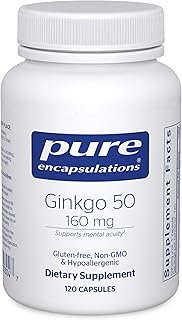
As women navigate midlife and menopause, understanding factors that support overall well-being becomes increasingly relevant. Among the many botanical extracts studied for their properties, Ginkgo biloba has garnered attention for its potential antioxidant and anti-inflammatory actions.
This article will explore the mechanisms by which Ginkgo biloba may exert these effects, drawing from available research. It’s important to approach this information as educational, not as medical advice, and to discuss any health concerns with a healthcare professional.
Understanding Oxidative Stress and Inflammation in Midlife
Oxidative stress occurs when there’s an imbalance between the production of reactive oxygen species (free radicals) and the body’s ability to counteract their harmful effects. These free radicals can damage cells, proteins, and DNA, contributing to various cellular changes [1]. In midlife, hormonal shifts and other factors can influence the body’s oxidative balance.
Inflammation is a natural protective response of the immune system to injury or infection. However, chronic low-grade inflammation, often without clear symptoms, can also contribute to cellular stress. Both oxidative stress and inflammation are interconnected processes that can influence various bodily systems.
Ginkgo Biloba as an Antioxidant: Key Compounds and Mechanisms
Ginkgo biloba extract (GBE) is rich in several bioactive compounds, notably flavonoids and terpenoids, which are thought to contribute to its observed properties [2]. These compounds are considered to be key players in the ginkgo biloba antioxidant mechanism.
Flavonoids, such as quercetin, kaempferol, and isorhamnetin, found in Ginkgo biloba, have been identified for their ability to scavenge free radicals directly [3]. This direct scavenging action helps to neutralize reactive oxygen species before they can cause cellular damage [4].
Beyond direct scavenging, Ginkgo biloba may also support the body’s own antioxidant defense systems. Research suggests that components of Ginkgo biloba may influence pathways like the Nrf2 (nuclear factor erythroid 2-related factor 2) pathway, which plays a crucial role in regulating the expression of antioxidant enzymes in the body [5]. By supporting these endogenous systems, Ginkgo biloba may help the body better manage oxidative challenges.
Anti-Inflammatory Actions of Ginkgo Biloba
In addition to its antioxidant properties, Ginkgo biloba has been investigated for its potential anti-inflammatory effects. While the exact mechanisms are complex and still being explored, research indicates that various components within Ginkgo biloba extract may modulate inflammatory pathways.
Studies suggest that Ginkgo biloba may influence the production of inflammatory mediators, potentially helping to regulate inflammatory responses at a cellular level [6]. This modulation could contribute to a more balanced inflammatory state within the body. However, more research is needed to fully understand the scope and implications of these anti-inflammatory actions, particularly in human populations.

Ginkgo Biloba, Oxidative Stress, and Cellular Protection
The combined antioxidant and anti-inflammatory properties of Ginkgo biloba are thought to contribute to its broader cellular protective effects. For instance, oxidative stress has been implicated in various cellular processes [1], and Ginkgo biloba extract has been studied for its potential to support mitochondrial function and reduce oxidative stress within cells [7]. Mitochondria are vital for cellular energy production, and their proper function is crucial for cellular health.
Some research has explored Ginkgo biloba’s potential to offer neuroprotection through mechanisms involving oxidative stress reduction and modulation of certain cellular pathways [8][9]. For example, studies have investigated its ability to inhibit mitochondrial oxidative stress and apoptosis, which is programmed cell death [10]. While promising, much of this research is in early stages or conducted in specific experimental models, and findings may not directly translate to human health outcomes.
Evidence Strength and Future Directions
The evidence supporting Ginkgo biloba’s antioxidant and anti-inflammatory mechanisms is considered moderate. While in vitro and animal studies have provided significant insights into the ginkgo biloba antioxidant mechanism and its potential to modulate inflammatory responses, human clinical trials, particularly those focusing specifically on these mechanisms in midlife women, are still developing.
Some human studies, such as one examining blood markers of inflammation and oxidative stress in individuals with mild cognitive impairment, have shown that a specific Ginkgo biloba extract (EGb 761) may impact these markers [6]. However, the broader implications for general health and well-being require further investigation with larger and more diverse populations. Continued research is essential to fully elucidate the clinical relevance of these findings.


References
- Oxidative stress and Alzheimer disease. The American journal of clinical nutrition, 2000
- Ginkgo biloba–an appraisal. Kathmandu University medical journal (KUMJ), 2004
- Properties of Ginkgo biloba L.: Antioxidant Characterization, Antimicrobial Activities, and Genomic MicroRNA Based Marker Fingerprints. International journal of molecular sciences, 2020
- Proanthocyanidins from Ginkgo biloba leaf extract and their radical scavenging activity. Pharmaceutical biology, 2011
- The potential of Ginkgo biloba in the treatment of human diseases and the relationship to Nrf2-mediated antioxidant protection. The Journal of pharmacy and pharmacology, 2022
- A randomized, open-label clinical trial in mild cognitive impairment with EGb 761 examining blood markers of inflammation and oxidative stress. Scientific reports, 2023
- Effects of EGb 761 Ginkgo biloba extract on mitochondrial function and oxidative stress. Pharmacopsychiatry, 2003
- Ginkgo biloba and neurodegenerative disorders. Frontiers in bioscience : a journal and virtual library, 2004
- Preconditioning with Ginkgo biloba (EGb 761®) provides neuroprotection through HO1 and CRMP2. Neurobiology of disease, 2012
- Inhibition of mitochondrial oxidative stress and apoptosis in the protection of Ginkgo biloba extract 50 against cognitive impairment. Journal of ethnopharmacology, 2025
These statements have not been evaluated by the Food and Drug Administration. This information is not intended to diagnose, treat, cure, or prevent any disease. Content is for informational purposes only and is not medical advice; consult a qualified healthcare provider before starting any supplement. As an Amazon Associate we earn from qualifying purchases.