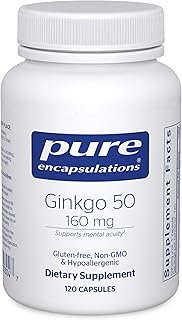
Ready to buy? Check current prices on Amazon and compare deals before you decide.
Many women entering perimenopause notice changes in memory, focus, and mental clarity and look for natural options that might help. Two supplements that frequently appear in conversations about brain health are Ginkgo biloba and Lion’s Mane mushroom, each with a long history of traditional use and a growing body of preliminary research.
This article reviews what is currently known about both ingredients, highlights where the evidence is thin, and offers practical points to consider when deciding whether either might fit into a broader wellness plan. It is not medical advice and should not replace a conversation with a qualified health professional.
What the Research Landscape Looks Like
Scientific studies on Ginkgo biloba and Lion’s Mane in the specific context of perimenopausal cognitive changes are scarce. Most published trials have focused on older adults with age‑related cognitive decline, on younger healthy volunteers, or on animal models. Because perimenopause involves fluctuating hormone levels that can affect neurotransmission and cerebral blood flow, results from other populations cannot be directly extrapolated.[1]
Systematic reviews that do exist tend to rate the overall quality of evidence as low to very low, citing small sample sizes, short durations, heterogeneous extracts, and a lack of standardized outcome measures.[2] Consequently, any claim that one supplement is superior to the other for perimenopausal brain health is speculative at best.
How Ginkgo Biloba Is Studied for Cognitive Function
Ginkgo biloba extracts are standardized to contain flavone glycosides and terpene lactones, compounds thought to improve cerebral circulation, reduce oxidative stress, and modulate neurotransmitter systems. In clinical trials, daily doses ranging from 120 to 240 mg of a standardized extract have been tested for periods of 24 to 52 weeks.[3][4] Some studies report modest improvements in attention, working memory, and processing speed, while others find no statistically significant difference versus placebo.[2]
Adverse events in these trials are generally mild and include gastrointestinal upset, headache, and dizziness. Ginkgo has been suspected of inhibiting platelet aggregation, so there is a theoretical risk of increased bleeding, especially when combined with anticoagulant or antiplatelet medications, and an individual bleeding event cannot be ruled out, although controlled studies have not found a significant effect on clotting.[5] The variability in extract composition across brands adds another layer of uncertainty when interpreting results.


How Lion’s Mane Is Studied for Cognitive Function
Lion’s Mane (Hericium erinaceus) contains hericenones and erinacines, compounds that have demonstrated nerve growth factor (NGF)‑stimulating activity in laboratory and animal studies. Human trials are fewer and typically involve daily doses of 500 to 3000 mg of dried fruiting body or mycelium powder for 8 to 16 weeks. A handful of small randomized controlled trials have reported improvements in subjective cognitive complaints and in scores on brief cognitive screening tools, but the magnitude of change is modest and confidence intervals are wide.[6]

Safety data from these short‑term studies suggest good tolerability, with occasional mild digestive discomfort. Allergic reactions are rare but possible, particularly in individuals with mushroom sensitivities. As with Ginkgo, product standardization varies widely, making it difficult to compare across studies or to know exactly what a consumer is ingesting.
Potential Overlap and Differences in Mechanisms
Both supplements are thought to support brain health through antioxidant and anti‑inflammatory pathways, yet their primary mechanistic hypotheses differ. Ginkgo’s emphasis on vascular tone and blood flow contrasts with Lion’s Mane’s focus on neurotrophic factor induction and possible myelination support. In theory, these mechanisms could be complementary, but no human trials have directly tested a combination versus either agent alone.
Because perimenopause involves both vascular changes (e.g., altered endothelial function) and neuroendocrine shifts (e.g., declining estrogen), a supplement that addresses only one pathway may provide limited benefit. The lack of mechanistic studies in perimenopausal women means any synergy remains speculative.
Practical Considerations for Perimenopausal Women
If you are considering adding either supplement, start by discussing it with a healthcare provider who knows your medical history, current medications, and any bleeding risk. Choose products that provide a certificate of analysis confirming the amount of active constituents and the absence of contaminants such as heavy metals or pesticides.
Track your response in a simple journal — note dosage, timing, sleep quality, mood, and any cognitive changes over at least 8 to 12 weeks. This personal data can help you and your clinician decide whether to continue, adjust, or discontinue. Remember that lifestyle factors — regular aerobic exercise, adequate sleep, stress management, and a nutrient‑dense diet — have far stronger evidence for supporting cognitive health during the menopausal transition.
References
- Effects of herbal and dietary supplements on cognition in menopause: a systematic review. Maturitas (2011).
- Ginkgo biloba for cognitive impairment and dementia. Cochrane Database of Systematic Reviews (2026).
- A placebo-controlled, double-blind, randomized trial of an extract of Ginkgo biloba for dementia (North American EGb Study Group). JAMA (1997).
- Efficacy and safety of Ginkgo biloba extract EGb 761 in mild cognitive impairment with neuropsychiatric symptoms: a randomized, placebo-controlled, double-blind, multi-center trial. International Journal of Geriatric Psychiatry (2014).
- Potential interaction of Ginkgo biloba leaf with antiplatelet or anticoagulant drugs: what is the evidence?. Molecular Nutrition & Food Research (2008).
- Improving effects of the mushroom Yamabushitake (Hericium erinaceus) on mild cognitive impairment: a double-blind placebo-controlled clinical trial. Phytotherapy Research (2009).
These statements have not been evaluated by the Food and Drug Administration. This information is not intended to diagnose, treat, cure, or prevent any disease. Content is for informational purposes only and is not medical advice; consult a qualified healthcare provider before starting any supplement. As an Amazon Associate we earn from qualifying purchases.