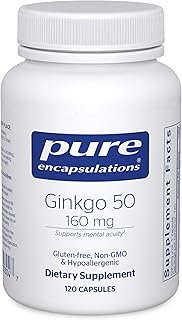
As women navigate midlife and the menopausal transition, maintaining cognitive vitality often becomes a focus. Ginkgo biloba, an herbal supplement, has garnered interest for its potential role in supporting cognitive function. This article explores what current research suggests regarding optimal dosages for ginkgo biloba when considering its impact on cognition.
It’s important to approach discussions about supplements with an evidence-based perspective. While some studies have investigated ginkgo biloba’s effects, understanding the dosages used in these studies can help inform personal choices. We will review findings from published research to provide insights into ginkgo cognitive dosage.
What is Ginkgo Biloba and How Might it Support Cognition?
Ginkgo biloba is derived from the leaves of the ginkgo tree and has been used traditionally for centuries. Modern interest in ginkgo often centers on its standardized extracts, such as EGb 761, which are rich in flavonoids and terpenoids [1]. These compounds are believed to contribute to the herb’s potential biological activities, including antioxidant properties and effects on blood flow.
The mechanisms by which ginkgo biloba might influence cognitive function are thought to involve several pathways. These can include improving blood circulation, particularly to the brain, and offering neuroprotective effects through its antioxidant capacity [1]. Some research also suggests it may modulate neurotransmitter systems, which are crucial for learning and memory [2].


Investigating Ginkgo Cognitive Dosage in Research Studies
Numerous studies have explored the impact of ginkgo biloba on various aspects of cognitive function, often employing different dosages. A common theme in much of the research involves standardized extracts, with particular attention paid to the concentration of active compounds [1]. Understanding the dosages used in these studies is key to interpreting their findings.
Several systematic reviews and meta-analyses have synthesized the evidence on ginkgo biloba for cognitive impairment and dementia. For instance, a systematic review published in 2015 examined the efficacy and adverse effects of ginkgo biloba, including various dosages in its analysis [3]. Another Cochrane review from 2007 also looked at ginkgo biloba for cognitive impairment and dementia, incorporating studies with different dosage regimens [4].
While specific optimal dosages can vary between studies and depend on the targeted outcome, consistent dosages of standardized ginkgo biloba extract, often around 120-240 mg per day, have been frequently investigated in research pertaining to cognitive support [3][1]. These dosages are typically divided into two or three daily administrations.
Dosage Ranges Explored for Cognitive Support
In studies assessing cognitive enhancement, a range of ginkgo biloba dosages has been utilized. For individuals experiencing age-related cognitive decline or mild cognitive impairment, dosages between 120 mg and 240 mg per day of standardized extract have been commonly explored [3][4]. These dosages are often taken as 60 mg twice daily or 120 mg once or twice daily.

For instance, some research has indicated that higher daily dosages, such as 240 mg, might offer more pronounced effects in certain cognitive domains compared to lower dosages like 120 mg, particularly over longer study durations [3]. However, it is important to note that not all studies have found consistent benefits across all cognitive measures or at all dosages [5][4].
The duration of supplementation is another critical factor. Many studies investigating ginkgo’s impact on cognition have involved administration over several months, or even years, to observe potential effects [5]. Short-term studies may not fully capture the potential benefits, if any, of ginkgo biloba on cognitive function.
Considerations for Women in Midlife and Menopause
Women in midlife and during the menopausal transition may experience various cognitive changes. While ginkgo biloba has been studied for its potential cognitive support, specific research focusing solely on this demographic and its unique hormonal fluctuations in relation to ginkgo dosage is more limited within the provided evidence. However, general findings on ginkgo cognitive dosage can still be relevant.
The evidence suggests that for general cognitive support, dosages of standardized ginkgo biloba extract in the range of 120-240 mg daily have been most frequently investigated [3]. It is important to remember that individual responses to supplements can vary, and what is considered an optimal dosage for one person may not be the same for another.
When considering any supplement, including ginkgo biloba, it is always advisable to consult with a healthcare professional to discuss appropriate dosages, potential interactions with other medications, and to ensure it aligns with individual health needs and circumstances.
References
- Ginkgo biloba: indications, mechanisms, and safety. The Psychiatric clinics of North America, 2013
- Standardized extract of Ginkgo biloba induced memory consolidation in female mice with hypofunction of vesicular acetylcholine transporter. Behavioural brain research, 2025
- Efficacy and adverse effects of ginkgo biloba for cognitive impairment and dementia: a systematic review and meta-analysis. Journal of Alzheimer’s disease : JAD, 2015
- Ginkgo biloba for cognitive impairment and dementia. The Cochrane database of systematic reviews, 2007
- Ginkgo biloba for prevention of dementia: a randomized controlled trial. JAMA, 2008
These statements have not been evaluated by the Food and Drug Administration. This information is not intended to diagnose, treat, cure, or prevent any disease. Content is for informational purposes only and is not medical advice; consult a qualified healthcare provider before starting any supplement. As an Amazon Associate we earn from qualifying purchases.