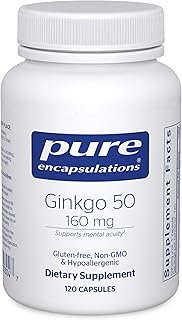
As women navigate midlife and the menopausal transition, maintaining cognitive vitality and emotional well-being often becomes a focus. Many seek natural approaches to support these aspects of health. Ginkgo biloba, a well-researched botanical, is often discussed in this context, partly due to its potential interactions with monoamine oxidase (MAO).
This article will explore the current understanding of ginkgo MAO inhibition and its potential implications for cognitive function and mood, drawing on available scientific evidence. We aim to provide clear, evidence-based information to help you understand this particular mechanism of action.
Understanding Monoamine Oxidase (MAO) and its Role
Monoamine oxidase (MAO) is a family of enzymes found throughout the body, including the brain. These enzymes play a crucial role in the breakdown of monoamine neurotransmitters such as dopamine, norepinephrine, and serotonin [1]. These neurotransmitters are essential for regulating various brain functions, including mood, attention, and cognitive processes.
There are two main forms of MAO: MAO-A and MAO-B. MAO-A primarily metabolizes serotonin, norepinephrine, and dopamine, while MAO-B mainly metabolizes dopamine and other trace amines [1]. By breaking down these neurotransmitters, MAO helps to regulate their levels in the synaptic cleft, influencing neural signaling.
Ginkgo Biloba’s Interaction with MAO: The Evidence
Research suggests that extracts of Ginkgo biloba leaves can inhibit monoamine oxidase activity [2]. This MAO inhibition is considered one of the potential mechanisms through which ginkgo may exert its effects on the brain [3].
Specific compounds within Ginkgo biloba have been identified as contributing to this MAO inhibitory effect. For instance, kaempferol, a flavonoid found in ginkgo extracts, has been identified as a monoamine oxidase inhibitor [4]. Other bioactive phytochemicals in Ginkgo biloba are also being investigated for their potential against age-related conditions, including their impact on neurotransmitter systems [5].
The ability of ginkgo to influence MAO activity means it could potentially affect the concentrations of monoamine neurotransmitters in the brain. By inhibiting the breakdown of these neurotransmitters, ginkgo might help to maintain their levels, which could have implications for cognitive function and mood.


Implications for Cognitive Function
The potential for ginkgo MAO inhibition to influence neurotransmitter levels suggests a possible role in supporting cognitive function. Neurotransmitters like dopamine and norepinephrine are vital for attention, memory, and executive functions. By potentially modulating their breakdown, ginkgo could contribute to maintaining optimal levels of these brain chemicals.
While direct evidence linking ginkgo’s MAO inhibition specifically to cognitive improvements in humans is complex and part of broader research into ginkgo’s mechanisms, the overall understanding of ginkgo’s neuroprotective and neurotransmitter modulating effects is growing [6]. Some research platforms are exploring Ginkgo biloba’s bioactive phytochemicals against age-related diseases, which often involve cognitive aspects [5]. Furthermore, studies have explored ginkgo’s potential in contexts such as ADHD-like conditions, which involve neurotransmitter regulation [7], and in the management of Alzheimer’s disease, where neurotransmitter imbalances are a factor [8].

Implications for Mood Support
Monoamine neurotransmitters, especially serotonin and norepinephrine, are profoundly involved in mood regulation. The potential for ginkgo MAO inhibition to increase the availability of these neurotransmitters could therefore be relevant for mood support. While ginkgo is not considered a primary mood-modulating agent, its influence on neurotransmitter metabolism offers a plausible pathway for contributing to emotional well-being.
Some research has explored ginkgo in relation to mood, including a study on a water-soluble polysaccharide from Ginkgo biloba leaves suggesting antidepressant activities via modulation of the gut microbiome [9]. Another study investigated Ginkgo biloba for antidepressant-induced sexual dysfunction, which can be related to neurotransmitter balance [10]. These diverse areas of research highlight the multifaceted potential interactions of ginkgo with systems that influence mood.
References
- Monoamine oxidase: radiotracer development and human studies. Methods (San Diego, Calif.), 2002
- Extracts of Ginkgo biloba leaves inhibit monoamine oxidase. Life sciences, 1996
- Ginkgo biloba: indications, mechanisms, and safety. The Psychiatric clinics of North America, 2013
- Identification of kaempferol as a monoamine oxidase inhibitor and potential Neuroprotectant in extracts of Ginkgo biloba leaves. The Journal of pharmacy and pharmacology, 2000
- Ginkgo Biloba Bioactive Phytochemicals against Age-Related Diseases: Evidence from a Stepwise, High-Throughput Research Platform. Antioxidants (Basel, Switzerland), 2024
- In vitro studies to investigate the potential neuroprotective and neurotransmitter modulation effects of a standardized Ginkgo biloba extract associated with phosphatidylserine. Frontiers in nutrition, 2026
- Protective Potential of Ginkgo biloba Against an ADHD-like Condition. Current molecular pharmacology, 2021
- Ginkgo biloba and Its Chemical Components in the Management of Alzheimer’s Disease. The American journal of Chinese medicine, 2024
- One water-soluble polysaccharide from Ginkgo biloba leaves with antidepressant activities via modulation of the gut microbiome. Food & function, 2019
- Ginkgo biloba for antidepressant-induced sexual dysfunction. Journal of sex & marital therapy, 1998
These statements have not been evaluated by the Food and Drug Administration. This information is not intended to diagnose, treat, cure, or prevent any disease. Content is for informational purposes only and is not medical advice; consult a qualified healthcare provider before starting any supplement. As an Amazon Associate we earn from qualifying purchases.