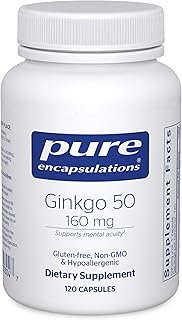
For women navigating midlife and menopause, exploring various supplements to support well-being is common. Ginkgo biloba is often considered for its potential cognitive support, and some individuals wonder about combining it with other compounds.
Understanding the current evidence, even if limited, regarding ginkgo supplement stacking can help inform your choices. It’s important to approach these combinations cautiously and with an awareness of potential interactions and the need for professional guidance.
Ginkgo Biloba and Antioxidants: A Potential Pairing
Ginkgo biloba extract contains compounds with antioxidant properties [1]. Antioxidants are of interest for their role in addressing oxidative stress, which is implicated in various age-related processes [2]. Some research has explored combining ginkgo biloba with other antioxidant compounds.
For instance, one study investigated ginkgo biloba administered singly and combined with antioxidants in individuals experiencing tinnitus [3]. While this specific study focused on tinnitus, it illustrates an interest in exploring ginkgo’s role alongside other antioxidant strategies.
It’s worth noting that the body’s natural antioxidant defenses are complex, and while ginkgo may contribute to antioxidant activity, the full implications of combining it with other specific antioxidants for broader health goals, especially during midlife and menopause, are still being understood. The evidence for general population benefits from such combinations remains limited.


Ginkgo and Nootropics: Exploring Cognitive Support
Ginkgo biloba has been studied for its potential effects on cognitive function, with some research suggesting it may support cerebral blood flow and have neuroprotective properties [4][5]. Given this, it’s sometimes considered alongside other compounds categorized as nootropics, which are substances that may influence cognitive performance [6].
Plant-derived nootropics, including ginkgo, are a subject of ongoing research for their potential in human cognition [5]. While ginkgo biloba is included in reviews of nootropic herbs, shrubs, and trees, specific research on the combined effects of ginkgo with other nootropics for women in midlife or menopause is not extensively documented in the provided evidence. A systematic review touched upon the efficiency of different supplements in alleviating symptoms of ADHD, mentioning stimulants, but did not provide specific details on ginkgo stacking with other nootropics in this context for midlife women [7].
The concept of ginkgo supplement stacking with other nootropics is intriguing, but robust, evidence-based guidance on specific combinations, dosages, and long-term safety for women in midlife is currently limited. It is important to remember that ‘nootropic’ is a broad term, and individual responses to combinations can vary.
Considerations for Blood Thinning and Bleeding Risk
A crucial consideration when contemplating ginkgo supplement stacking, particularly for women in midlife and menopause, is its potential interaction with blood-thinning compounds. Ginkgo biloba has been associated with effects on blood clotting [8].

Combining ginkgo with other supplements or medications that also have anti-atherosclerotic properties or may affect blood coagulation could potentially increase the risk of bleeding [8]. This risk is a significant safety concern, and it underscores the importance of discussing all supplements with a healthcare provider, especially if you are taking blood thinners or have a bleeding disorder.
Before considering any ginkgo supplement stacking, especially with compounds that might also influence blood clotting, it is essential to consult with a doctor to assess your individual risk profile and ensure safety.
What the Evidence Says About Specific Combinations (Limited Data)
The provided evidence offers limited direct insight into specific ginkgo supplement stacking combinations for women in midlife and menopause. While ginkgo has been studied for its potential in areas like cognitive function [5][6] and antioxidant activity [1], robust studies on its combined use with other specific supplements for this demographic are not extensively detailed.
For example, while ginkgo was combined with antioxidants in a tinnitus study [3], this does not provide generalizable evidence for broader health goals or for midlife women specifically. Similarly, while ginkgo is recognized as a plant-derived nootropic, detailed studies on its safe and effective combination with other nootropics are not provided [5][6].
The overall evidence strength for ginkgo supplement stacking for women in midlife and menopause is limited. This means that while some combinations might be explored in research settings, there isn’t widespread, strong evidence to recommend specific ‘stacks’ for general use.
References
- EGb 761: ginkgo biloba extract, Ginkor. Drugs in R&D, 2003
- Antioxidant strategies for Alzheimer’s disease. The Proceedings of the Nutrition Society, 2002
- Ginkgo biloba Administered Singly and Combined With Antioxidants in Tinnitus Patients. Journal of audiology & otology, 2023
- Ginkgo biloba for cerebral insufficiency. British journal of clinical pharmacology, 1992
- Plant-derived nootropics and human cognition: A systematic review. Critical reviews in food science and nutrition, 2023
- Nootropic Herbs, Shrubs, and Trees as Potential Cognitive Enhancers. Plants (Basel, Switzerland), 2023
- Efficiency of Different Supplements in Alleviating Symptoms of ADHD with or Without the Use of Stimulants: A Systematic Review. Nutrients, 2025
- Navigating the Effects of Anti-Atherosclerotic Supplements and Acknowledging Associated Bleeding Risks. International journal of molecular sciences, 2025
These statements have not been evaluated by the Food and Drug Administration. This information is not intended to diagnose, treat, cure, or prevent any disease. Content is for informational purposes only and is not medical advice; consult a qualified healthcare provider before starting any supplement. As an Amazon Associate we earn from qualifying purchases.