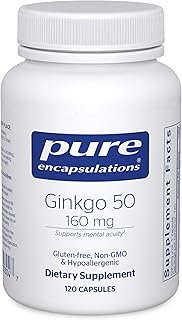
As women navigate the unique changes of midlife and menopause, many explore natural approaches to support their well-being. Ginkgo biloba, a well-researched botanical, is often considered for its potential to support cognitive function and circulation.
Understanding how ginkgo biloba is absorbed by the body, a concept known as bioavailability, is key to potentially maximizing its intended effects. This article will delve into the factors influencing ginkgo bioavailability and absorption, offering insights to help you make informed choices.
What is Bioavailability and Why Does it Matter for Ginkgo Biloba?
Bioavailability refers to the proportion of an administered substance that enters the circulation and is able to have an active effect. For ginkgo biloba, this means how much of the active compounds, primarily ginkgolides and bilobalide, actually reach the bloodstream after consumption [1][2]. A higher bioavailability generally suggests that more of the active components are available to the body.
The primary active compounds in Ginkgo biloba extracts are ginkgolides (A, B, C, J, and M) and bilobalide [3]. These compounds are absorbed into the systemic circulation, with their pharmacokinetic profiles being well-studied. For instance, studies have shown that ginkgolides and bilobalide are absorbed and reach peak plasma concentrations within a few hours after oral administration [1][2].
Understanding bioavailability is particularly relevant for individuals seeking to incorporate ginkgo biloba into their routine, as it can influence the consistency and potential effectiveness of the supplement. Factors such as the extract’s formulation and the presence of other substances can impact how well these active components are absorbed and utilized by the body.

Key Active Compounds and Their Absorption
Ginkgo biloba extracts are standardized to contain specific levels of active compounds, notably ginkgo flavone glycosides and terpene lactones, which include ginkgolides and bilobalide [3]. These are considered the main constituents responsible for the extract’s studied properties.
Research indicates that ginkgolides A, B, and bilobalide are readily absorbed after oral administration [1][2]. For example, the mean absolute bioavailability of ginkgolide A has been reported to be 80-98%, ginkgolide B 88-100%, and bilobalide 79-88% [1]. These figures suggest efficient absorption of these specific compounds.
Bilobalide, one of the terpene lactones, also demonstrates good absorption. Its pharmacokinetic profile has been extensively reviewed, showing it to be absorbed and distributed throughout the body [4]. The consistent absorption of these key compounds is a foundation for the potential effects of ginkgo biloba.
Factors Influencing Ginkgo Bioavailability and Absorption
Several factors can influence the bioavailability and absorption of ginkgo biloba extracts. The form of the extract plays a significant role. For instance, a study comparing a standard commercially available Ginkgo biloba extract with a liposomal extract (Ginkgosome) found that the liposomal formulation showed improved absorption of ginkgolides A, B, C, and bilobalide, with higher concentrations observed in the blood [5]. This suggests that advanced delivery systems could potentially enhance absorption.

The presence of food may also influence absorption. Some studies suggest that taking ginkgo with food might slightly delay absorption but may not significantly alter the overall bioavailability of the active compounds [2]. However, specific recommendations regarding food intake can vary, and it’s often prudent to follow product-specific instructions.
Individual physiological differences can also play a role. Factors such as age, metabolism, and gut health can subtly influence how effectively compounds are absorbed and processed by the body. While ginkgo biloba is generally well-absorbed, these individual variations are part of the broader picture of supplement efficacy.
Potential Interactions Affecting Absorption and Efficacy
It’s important to be aware of potential interactions that could affect ginkgo biloba’s absorption or its activity in the body. Ginkgo has been noted for its potential to interact with certain medications [6][7]. These interactions can occur through various mechanisms, including effects on drug-metabolizing enzymes or drug transporters [8].
For example, ginkgo biloba has been studied for its potential to interact with medications that affect blood clotting, such as anticoagulants and antiplatelet agents [6][3]. These interactions could potentially alter the effects of either the medication or the ginkgo. It is always important to discuss any supplements you are taking with a healthcare professional, especially if you are on medication.
While direct impacts on ginkgo’s own absorption due to specific food components or minor interactions might be less pronounced than herb-drug interactions, considering the overall context of your diet and other supplements can be helpful. Choosing high-quality, standardized extracts can also help ensure a consistent concentration of active compounds [9].
Choosing a Quality Ginkgo Biloba Extract
When selecting a ginkgo biloba product, opting for a standardized extract is often recommended. Standardization ensures that the extract contains a consistent amount of the key active compounds, such as ginkgo flavone glycosides and terpene lactones, including ginkgolides and bilobalide [3]. This consistency can contribute to more predictable absorption and potential effects.
The quality of the raw material and the extraction process can also influence the final product’s composition and, by extension, the bioavailability of its active components. Reputable manufacturers often adhere to strict quality control standards to ensure the purity and potency of their extracts [9].
While specific instructions for maximizing absorption are often product-dependent, choosing a well-researched, high-quality extract provides a foundational step. Some newer formulations, such as liposomal extracts, are being explored for their potential to enhance absorption, offering another consideration for those seeking to optimize their ginkgo intake [5].


References
- The bioavailability of ginkgolides in Ginkgo biloba extracts. Planta medica, 1997
- Pharmacokinetics and bioavailability of a Ginkgo biloba extract. Journal of ocular pharmacology and therapeutics : the official journal of the Association for Ocular Pharmacology and Therapeutics, 2002
- Ginkgo biloba: indications, mechanisms, and safety. The Psychiatric clinics of North America, 2013
- Bilobalide: A review of its pharmacology, pharmacokinetics, toxicity, and safety. Phytotherapy research : PTR, 2021
- A double-blind, randomised cross-over study to evaluate the absorption of a commercially available Ginkgo biloba extract compared to the liposomal extract Ginkgosome. BMC complementary medicine and therapies, 2022
- Herb-drug interactions. Lancet (London, England), 2000
- Herb-Drug Interactions and Their Impact on Pharmacokinetics: An Update. Current drug metabolism, 2023
- Pharmacokinetic and pharmacodynamic herb-drug interactions-part I. Herbal medicines of the central nervous system. PeerJ, 2023
- Ginkgo biloba–an appraisal. Kathmandu University medical journal (KUMJ), 2004
These statements have not been evaluated by the Food and Drug Administration. This information is not intended to diagnose, treat, cure, or prevent any disease. Content is for informational purposes only and is not medical advice; consult a qualified healthcare provider before starting any supplement. As an Amazon Associate we earn from qualifying purchases.