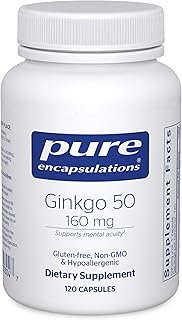
As women navigate midlife and menopause, supporting overall health, including brain health, often becomes a priority. Oxidative stress, a natural process involving unstable molecules called free radicals, can impact various cells, including those in the brain. Understanding how to support cellular defenses against this process is an area of ongoing interest.
Ginkgo biloba, a well-known botanical, has been studied for its potential properties, particularly its antioxidant capacity. Research suggests that standardized ginkgo extracts may offer support in mitigating the effects of oxidative stress, potentially contributing to cellular protection in the brain and other systems.
Understanding Oxidative Stress and Brain Health
Oxidative stress occurs when there is an imbalance between the production of free radicals and the body’s ability to counteract their harmful effects through antioxidants. These free radicals can damage cell components, including proteins, lipids, and DNA. In the brain, where metabolic activity is high, cells can be particularly susceptible to oxidative stress [1].
Over time, cumulative oxidative stress is thought to contribute to cellular aging processes and may be a factor in various neurocognitive changes associated with aging [2]. Supporting the body’s natural antioxidant defenses is therefore considered a valuable approach for maintaining cellular integrity, especially in the brain.
Ginkgo Biloba: A Source of Antioxidant Compounds
Ginkgo biloba extract is rich in various bioactive compounds, including flavonoids and terpenoids, which are recognized for their antioxidant properties [3]. These compounds are believed to be responsible for many of the observed effects of ginkgo. By acting as scavengers of free radicals, these antioxidants can help neutralize harmful molecules, potentially reducing cellular damage caused by oxidative stress [4].
Research indicates that Ginkgo biloba extract can directly combat oxidative stress and prevent oxidative stress-induced apoptosis (programmed cell death) in neuroblastoma cells by blocking p53 activation [5]. This suggests a protective role at a cellular level.


Protecting Brain Cells: The Ginkgo Antioxidant Benefits
The brain is a primary focus for ginkgo’s antioxidant benefits. Studies have explored how Ginkgo biloba may help protect brain cells from damage caused by oxidative stress. For instance, Ginkgo biloba extract has been shown to exert neuroprotective and antioxidant effects against conditions involving neurological disorders [1]. This suggests a broader protective capacity beyond just general oxidative scavenging.
Furthermore, Ginkgo biloba extract has been observed to inhibit mitochondrial oxidative stress and apoptosis, which can contribute to cognitive impairment [6]. Mitochondria are essential for energy production in cells, and their proper function is critical for brain health. Protecting these cellular powerhouses from oxidative damage is a significant aspect of ginkgo’s potential role in supporting brain cell integrity [7].

The potential of Ginkgo biloba in supporting brain health extends to its ability to modulate key cellular pathways. Evidence suggests a relationship between ginkgo’s potential in human diseases and Nrf2-mediated antioxidant protection [4]. Nrf2 is a protein that plays a central role in regulating the expression of antioxidant proteins that protect against oxidative damage. By influencing this pathway, ginkgo may enhance the body’s own internal antioxidant defenses.
Supporting Cellular Resilience in Midlife
For women navigating midlife and menopause, maintaining cellular resilience is key. The cumulative effects of oxidative stress can impact various bodily systems, and supporting robust antioxidant defenses can be a proactive step. Ginkgo biloba’s capacity to act as an antioxidant may contribute to maintaining healthy cellular function in the brain and beyond [8].
While much of the research on ginkgo’s neuroprotective effects has focused on specific conditions, the underlying mechanisms, such as its antioxidant properties, are relevant to general cellular health. The ability of ginkgo to mitigate oxidative stress and protect against related cellular damage offers a potential pathway for supporting brain cell vitality as part of an overall wellness strategy [1][2].
References
- Neuroprotective and Antioxidant Effect of Ginkgo biloba Extract Against AD and Other Neurological Disorders. Neurotherapeutics : the journal of the American Society for Experimental NeuroTherapeutics, 2019
- Improvement of age-related neurocognitive disorders by Ginkgo biloba extract: neuroprotection in focus. International journal of psychiatry in clinical practice, 2026
- Properties of Ginkgo biloba L.: Antioxidant Characterization, Antimicrobial Activities, and Genomic MicroRNA Based Marker Fingerprints. International journal of molecular sciences, 2020
- The potential of Ginkgo biloba in the treatment of human diseases and the relationship to Nrf2-mediated antioxidant protection. The Journal of pharmacy and pharmacology, 2022
- Ginkgo biloba Prevents Oxidative Stress-Induced Apoptosis Blocking p53 Activation in Neuroblastoma Cells. Antioxidants (Basel, Switzerland), 2020
- Inhibition of mitochondrial oxidative stress and apoptosis in the protection of Ginkgo biloba extract 50 against cognitive impairment. Journal of ethnopharmacology, 2025
- Effects of EGb 761 Ginkgo biloba extract on mitochondrial function and oxidative stress. Pharmacopsychiatry, 2003
- Ginkgo biloba Extract 50 (GBE50) Exerts Antifibrotic and Antioxidant Effects on Pulmonary Fibrosis in Mice by Regulating Nrf2 and TGF-β1/Smad Pathways. Applied biochemistry and biotechnology, 2024
These statements have not been evaluated by the Food and Drug Administration. This information is not intended to diagnose, treat, cure, or prevent any disease. Content is for informational purposes only and is not medical advice; consult a qualified healthcare provider before starting any supplement. As an Amazon Associate we earn from qualifying purchases.